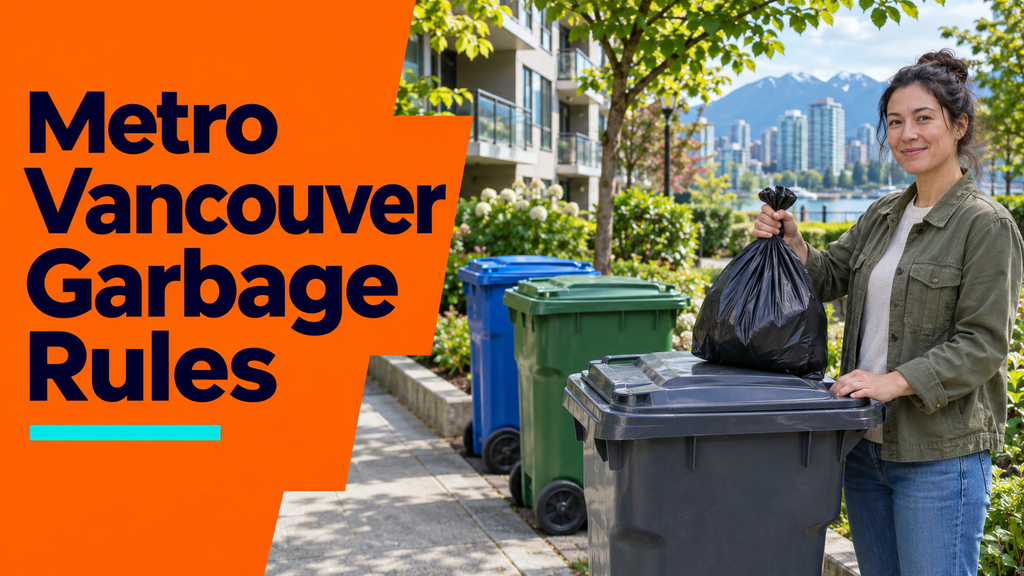
Putting out the trash in Metro Vancouver is more than tossing a bag into a bin. The region has some of the strictest garbage rules in Canada, with many common household items banned from the garbage and surcharges applied when they turn up in loads.
These rules affect homeowners, renters, strata buildings, businesses and waste haulers across the region. This guide explains how Metro Vancouver’s disposal ban programme works, which materials are banned or prohibited, how surcharges are calculated, what changed with 2026 tipping fees, how to sort your waste correctly at home, and where to take items that do not belong in the garbage.
Table of Contents
How Garbage Rules Work in Metro Vancouver
Garbage rules in the region operate at two levels. Your city or municipality runs curbside collection, sets pickup days and provides carts. Metro Vancouver runs the regional disposal facilities and sets the rules for what can be thrown away there.
The regional rules are set out in a bylaw. Banned materials are specified in the Greater Vancouver Sewerage and Drainage District Tipping Fee and Solid Waste Disposal Regulation (Tipping Fee Bylaw). Loads received at Metro Vancouver and City of Vancouver solid waste facilities are visually inspected for banned materials, and surcharges are levied if banned materials are present in the loads, at levels beyond thresholds defined in the Tipping Fee Bylaw.
| Feature | Details |
|---|---|
| Who sets disposal rules | Metro Vancouver (GVS&DD) |
| Governing bylaw | Tipping Fee and Solid Waste Disposal Regulation Bylaw |
| Who runs curbside pickup | Your local municipality |
| How rules are enforced | Inspections at disposal facilities |
| Penalty | Surcharges on loads containing banned materials |
Why Metro Vancouver Has Disposal Bans
The region bans materials that can be recycled or that create risks. Metro Vancouver bans the disposal of materials that are readily recyclable or operationally hazardous.
Bans are designed to change behaviour. As Metro Vancouver puts it, “Banning recyclable materials from disposal is one of Metro Vancouver’s regulatory tools to encourage recycling,” and “There’s a financial deterrent for not recycling.”
The programme also supports regional goals. By keeping recyclable and hazardous materials out of the waste stream, disposal bans contribute to the waste reduction and recycling goals of Metro Vancouver and member jurisdictions.
What You Cannot Put in the Garbage
At Metro Vancouver facilities, loads are inspected for banned materials that shouldn’t be in the garbage, such as recyclable materials, product stewardship materials, or hazardous materials that pose a risk to waste collection workers, the public, or the environment.
Banned Recyclable Materials
These are items that have established recycling options:
- Food scraps and other organics
- Corrugated cardboard
- Clean wood
- Expanded polystyrene (foam) packaging
- Recyclable containers, paper and packaging
- Yard and garden trimmings
- Metal household appliances
Some bans have been in place for years. Metro Vancouver introduced bans on food scraps and clean wood in 2015, and a disposal ban on expanded polystyrene (foam) packaging was introduced in 2018.
Product Stewardship Materials
Items covered by producer recycling programmes are also banned from the garbage. In Metro Vancouver, recyclable items, hazardous items, and items that are part of a product stewardship program, such as e-waste, tires, or pesticides, cannot be put into the garbage. Common examples include:
- Electronics and small appliances
- Batteries
- Paint and solvents
- Light bulbs and lighting products
- Tires
- Beverage containers with deposits
- Pesticides and household chemicals
Hazardous and Prohibited Materials
Some items are prohibited because they are dangerous. Richmond lists examples of materials banned from the landfill such as asbestos, liquids and sludges, automotive bodies and parts, and mattresses.
Food Scraps: The Rule That Affects Everyone
The organics ban is the one most households deal with daily. Food scraps have been banned from disposal since January 2015. This applies to apartments and condos as well as detached homes.
Food scraps must go in your municipal green bin or a home composter. The green bin accepts all food scraps, including produce, grains, dairy, and meat, as well as prepared food (leftovers).
The results have been significant. The region’s residents saved more than 400,000 tonnes of food scraps from the garbage in 2023.
Disposal Ban Surcharges Explained
When inspectors find banned materials in a load, the hauler is charged a surcharge. Haulers often pass these costs on to customers, so households, strata corporations and businesses can end up paying.
Surcharge Types
| Type of Banned Material | Surcharge |
|---|---|
| Banned recyclable materials (cardboard, organics, clean wood) | Minimum surcharge plus 50% of the tipping fee on the entire load |
| Product stewardship and hazardous materials | Minimum charge per load plus potential clean-up costs |
The recyclable materials surcharge is substantial. A surcharge of 50 per cent of the tipping fee on the entire load will be applied to loads containing banned recyclable materials.
For hazardous and stewardship items, the minimum surcharge has increased over time. Metro Vancouver’s 2025 update notes the surcharge for loads containing banned product stewardship and hazardous/operational impact materials will increase to $76 per load (from $73). Costs for removal, clean-up or remediation can be added on top.
Who Pays
Most residents never visit a disposal facility, but surcharges still matter. Garbage haulers serving apartments, condos and businesses can pass surcharges through in service fees. Repeated contamination can also lead to higher contract costs for strata corporations and commercial properties.
2026 Tipping Fee Changes
Metro Vancouver updates its fees regularly. For 2026, garbage tipping fees will increase by $2 per tonne for loads 1 tonne and over at all Metro Vancouver solid waste facilities, while there is no rate change for garbage loads under 1 tonne. These changes take effect July 1, 2026.
The bylaw prevails over any summary. In the event of any inconsistency between the information in fee documents and the Tipping Fee Bylaw, the Tipping Fee Bylaw will prevail. Businesses and haulers should review the full bylaw for exact rates.
Sorting Your Waste Correctly at Home
| Bin or Option | What Goes In |
|---|---|
| Garbage cart | Non-recyclable waste only, such as certain plastics, diapers and broken household items |
| Green bin | Food scraps, food-soiled paper and yard trimmings |
| Blue box or recycling carts | Containers, paper and packaging accepted by Recycle BC |
| Recycling depot | Glass, foam packaging, flexible plastics and other depot-only items |
| Return-It depot | Deposit beverage containers |
| Stewardship drop-off sites | Electronics, batteries, paint, light bulbs and other regulated products |
Sorting Tips
- Keep a kitchen container for food scraps and empty it into the green bin regularly.
- Flatten cardboard boxes and place them with recycling, never in the garbage.
- Rinse containers before recycling.
- Store batteries in a separate container and take them to a drop-off site.
- Check your municipality’s sorting guide or app when unsure.
Where to Take Banned Items
Metro Vancouver encourages residents to recycle instead of throwing items away. Banned Recyclable Materials and Product Stewardship Materials can be dropped off for recycling at locations listed in the Metro Vancouver Recycles directory.
You can also get help by phone. Richmond points residents to its drop-off options or to call 604-732-9253, the Recycling Council of BC hotline.
Common Drop-Off Options
- Municipal recycling depots and transfer stations
- Recycle BC depots for glass, foam and flexible plastics
- Return-It depots for beverage containers and electronics
- Product Care sites for paint and household hazardous waste
- Battery drop-off locations at retailers
- Mattress recycling facilities
Rules for Apartments, Condos and Strata Buildings
Multi-family buildings face extra challenges because many residents share the same bins.
Best Practices for Strata Councils and Property Managers
- Provide clearly labelled garbage, recycling and organics bins.
- Post sorting signs in waste rooms and lobbies.
- Share sorting guides with new residents and tenants.
- Arrange regular collection of large items and hard-to-recycle materials.
- Monitor bins for contamination and address problems quickly.
- Review hauler contracts and surcharge reports.
Good waste management can lower building operating costs and reduce strata fees over time. It can also reduce pest problems and fire risks in waste rooms, which may help with building insurance considerations.
Rules for Businesses
Businesses in Metro Vancouver must follow the same disposal bans as households. Restaurants, offices, retailers and construction sites are common sources of banned materials such as cardboard, food scraps and clean wood.
Business Compliance Tips
- Set up separate streams for cardboard, organics, recyclables and garbage.
- Train staff on sorting rules.
- Choose waste haulers that offer recycling and organics collection.
- Keep records of disposal and recycling services.
- Recycle electronics and batteries through stewardship programmes.
- Use certified contractors for asbestos and hazardous materials.
Proper sorting can reduce disposal costs, avoid surcharges and support sustainability reporting.
Common Mistakes That Trigger Surcharges
- Putting food scraps in the garbage instead of the green bin
- Throwing cardboard boxes into garbage dumpsters
- Disposing of foam packaging from new appliances or electronics
- Adding batteries or electronics to garbage bags
- Mixing paint cans or chemicals with regular waste
- Leaving mattresses or furniture in garbage bins
Final Thoughts
Metro Vancouver’s garbage rules are designed to keep recyclable, reusable and hazardous materials out of landfills and waste-to-energy facilities. Food scraps, cardboard, clean wood, foam packaging, electronics, batteries, paint and many other items are banned from the garbage, and surcharges apply when they are found in loads.
By sorting waste correctly, using green bins and recycling programmes, and taking banned items to proper drop-off locations, households, strata buildings and businesses can avoid extra costs and help the region meet its waste reduction goals.
Frequently Asked Questions
1. Are food scraps banned from garbage in Metro Vancouver?
Yes. Food scraps have been banned from disposal since January 2015 and must go in the green bin or a home composter.
2. What happens if banned items are found in the garbage?
Metro Vancouver applies surcharges to loads containing banned materials. Recyclable materials can trigger a 50 percent tipping fee surcharge on the whole load.
3. Where can I find drop-off locations for banned items?
Use the Metro Vancouver Recycles directory or call the Recycling Council of BC hotline at 604-732-9253.