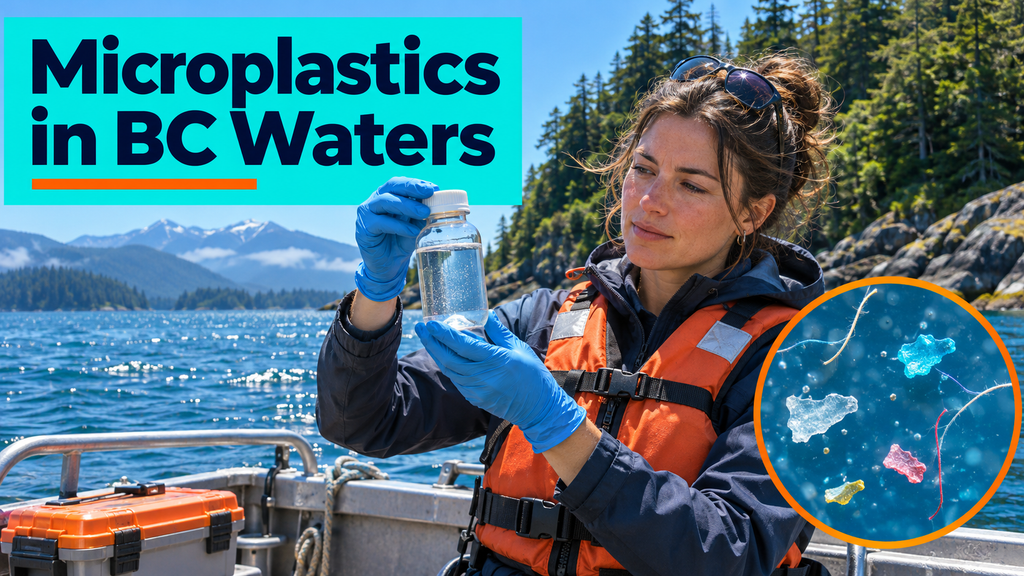
British Columbia’s rivers, inlets and coastal waters are home to salmon, orcas, shellfish and countless other species. They also support fishing, aquaculture, tourism and the everyday lives of millions of residents. Yet these waters face a growing, mostly invisible threat: microplastics.
Microplastics are tiny plastic particles less than five millimetres in size. They come from synthetic clothing, tire wear, broken-down litter, packaging and many other sources, and researchers have found them throughout BC’s marine and freshwater environments. This guide explains what microplastics are, how they reach BC waters, what local research has found, possible impacts on wildlife and people, how communities and governments are responding and practical steps residents can take to reduce microplastic pollution.
Table of Contents
What Are Microplastics?
Microplastics are defined as anything smaller than five millimetres in size. They come in different forms:
| Type | Description | Common Sources |
|---|---|---|
| Microfibres | Thin threads shed from fabrics | Polyester, nylon and acrylic clothing |
| Fragments | Broken pieces of larger plastic | Bottles, packaging, containers |
| Films | Thin sheets | Plastic bags and wraps |
| Pellets | Small industrial beads | Plastic manufacturing |
| Tire particles | Rubber and plastic wear | Vehicle tires on roads |
| Microbeads | Tiny spheres added to products | Older cosmetics and cleaners |
Experts describe microplastics as a unique challenge. “We’re encountering a pollutant unlike any pollutant we’ve ever seen before,” says Dr. Peter Ross. “This is not a chemical pollutant, it’s a structural pollutant.”
How Microplastics Reach BC Waters
Laundry and Wastewater
Washing synthetic clothing is a major source. Microplastics from Metro Vancouver’s laundered clothes are ending up in water treatment plants and filtering into the ocean, according to a study published in Marine Pollution Bulletin.
Treatment plants catch most particles, but not all. The study by Ocean Wise and Metro Vancouver found that while up to 99 per cent of the particles were filtered out, a significant amount still made it into the ocean. Many of the microplastics are in the form of fibres from polyester and rayon clothing.
The scale is huge. By Ocean Wise’s estimate, American and Canadian households combined release the weight of ten blue whales in microfibers through laundry washes every year.
Rivers
Rivers carry microplastics from cities, roads and farmland into the ocean. UBC research found that the Fraser River exports 9.88 trillion MPs to the SoG annually, with 64% exported during the spring freshet.
The same study found that highest MP concentrations were observed in springtime, attributed in the Fraser River to the freshet, and in Burrard Inlet to the influx of freshwater from the North Shore mountains snowmelt.
Stormwater and Runoff
Rain washes particles from roads, parking lots and yards into storm drains, many of which flow directly into streams and the ocean. Researchers note that in the Strait of Georgia, sources of contaminants include stormwater/runoff, atmospheric deposition, combined sewer overflows, rivers and wastewater outfalls.
Tires and Industry
Not all microplastics come from homes. Ross has noted that microplastics are also coming from light industry, small business and other sources, and pointed to a European study that found tire wear from vehicles was producing tiny beads of plastic that were going into the ocean.
Litter and Larger Plastics
Bags, bottles, fishing gear and packaging that end up on beaches or in water slowly break down into smaller fragments over time.
What Research Has Found in BC Waters
Strait of Georgia
The Strait of Georgia, between Vancouver Island and the Lower Mainland, shows some of the highest concentrations in BC. One water sample taken by researchers in B.C.’s Strait of Georgia contained an average of 3,200 plastic particles per cubic metre of ocean, while other samples off Vancouver contained up to 25,000 particles.
A broader survey found similar patterns. Research by Desforges and colleagues revealed high microplastic concentrations (up to ~ 10,000 particles/m3), with the highest levels occurring between the Strait of Georgia and Queen Charlotte Sound.
Zooplankton
Tiny animals at the base of the food web are ingesting plastic. A Vancouver Aquarium study found plastic in one out of every 34 copepods and in one in every 17 euphausiids. The authors say the highest concentrations of microplastics were found in the Strait of Georgia for both species of zooplankton.
Salmon and Whales
Plastic moves up the food chain. Researchers estimated that juvenile salmon in the Strait of Georgia may be ingesting two to seven microplastic particles per day, and returning adult salmon are ingesting up to 91 particles per day, which would mean a big marine animal like a humpback could ingest more than 300,000 microplastic particles per day.
Shellfish
Shellfish filter large amounts of water, which can concentrate particles. Researcher Sarah Dudas reported: “We’re finding fibres in almost every shellfish.”
Estuaries and Sediments
Microplastics also settle into mud and sediment. A study in the Cowichan Estuary on Vancouver Island documented microfibres and fragments in mudflat sediments, including materials such as nylon and PET.
Why Microplastics Are a Concern
Effects on Wildlife
Animals can mistake microplastics for food. Research has shown that microplastics in the ocean are being mistaken for food by zooplankton and fish, which raises concerns about the impact on their health.
Microfibres can affect the base of marine ecosystems. A study by the Ocean Wise Plastics Lab and UBC shows how microfibers affect organisms in the lower trophic levels of the marine food web, identifying direct impacts of microfiber pollution on ocean ecosystems, and warns that unless rapid action is taken, the health of the marine ecosystem might be under threat from microfiber pollution in the very near future.
Effects on Fisheries and Aquaculture
BC’s seafood industry depends on healthy waters. Researchers and shellfish farmers are working together to understand risks. One Vancouver Island oyster farmer who puts about 12 million oysters onto dinner plates every year has said he is supportive of the research.
Human Health Questions
Scientists are still studying how microplastics may affect people. UBC researchers note that no systematic scientific study has characterized the health effects of microplastics in the inhalable and respirable ranges, and are exploring their potential adverse effects on health. Ongoing research will help clarify risks from food, water and air.
Research and Solutions in BC
BC has become a leader in microplastics research.
Ocean Wise and UBC
A multi-disciplinary research network, including Ocean Wise, three UBC faculties and the Woods Hole Oceanographic Institute, is studying the sources, sinks and fate of microplastics in the Strait of Georgia. Their findings will have direct implications for urban management of drainage water and liquid wastewater practices; for the private sector as firms seek to design and manufacture more sustainable materials; and for the consumer and homeowners.
Modelling Microplastic Movement
The National Research Council of Canada has created a computer model to predict how plastics move through several waterways, including the Strait of Georgia and the Fraser River. Ocean Wise conducts field sampling in these water bodies, and the data are used to validate the model’s predictions for accumulation zones.
Standardising Research Methods
A major challenge is that different research teams in Canada and around the world use different data collection methods, which makes results hard to compare. Efforts are underway to standardise how microplastics are measured.
Policy Action
Governments are tackling larger plastics that break down into microplastics. Canada’s single-use plastics ban remains in force following a 2026 court ruling, maintaining the ban on the manufacture and sale of single-use plastic items. BC’s own regulation is phasing out many hard-to-recycle single-use plastic items to reduce waste and protect the environment. Canada has also banned microbeads in many personal care products.
What You Can Do to Reduce Microplastic Pollution
Change How You Do Laundry
Laundry is one of the easiest places to make a difference.
- Wash cold and gentle: Ocean Wise research suggests that washing laundry on cold and gentle settings can reduce microfiber shed up to 70%.
- Wash full loads: Less space means less friction and fewer fibres.
- Wash less often: Only wash clothes when they are dirty.
- Use a microfibre filter or bag: These catch fibres before they enter wastewater.
- Air-dry clothes: Reduces wear and saves energy.
Rethink Your Clothing Choices
Ocean Wise isn’t suggesting that people stop buying synthetic clothing, but it does want consumers to be more conscious about what they’re buying and where it’s coming from.
- Choose durable, high-quality clothing that lasts longer.
- Consider natural fibres such as cotton, wool, linen and hemp where practical.
- Buy second-hand to reduce demand for new synthetic clothing.
- Keep and repair clothes rather than replacing them often.
Reduce Single-Use Plastics
- Carry reusable water bottles, cups and bags.
- Choose products with less plastic packaging.
- Avoid litter and dispose of waste properly.
- Recycle soft plastics and foam through depots rather than garbage.
Drive Less and Maintain Tires
- Walk, cycle or take transit when possible.
- Keep tires properly inflated to reduce wear.
- Drive smoothly to limit tire abrasion.
Protect Storm Drains
- Never pour anything down storm drains.
- Sweep up litter and debris rather than washing it into gutters.
- Support community storm drain marking and cleanup programmes.
Join Shoreline Cleanups
Beach and river cleanups remove larger plastics before they break into microplastics. Many BC communities and organisations host regular cleanup events.
Microplastics and Your Home
Microplastics are found indoors too, especially in dust from synthetic carpets, furniture and clothing.
- Vacuum regularly with a HEPA filter.
- Dust surfaces with a damp cloth.
- Ventilate your home.
- Choose natural fibre rugs and textiles when replacing items.
What Businesses Can Do
- Manufacturers can design textiles that shed fewer fibres.
- Laundromats and hotels can install microfibre filters on washing machines.
- Retailers can reduce plastic packaging and offer refill options.
- Construction and industrial sites can control runoff and pellet spills.
- Restaurants and cafés can switch to reusable dishes and cups.
Final Thoughts
Microplastics are now found throughout BC waters, from the Fraser River and Burrard Inlet to the Strait of Georgia and coastal estuaries. Research shows they enter through laundry wastewater, rivers, stormwater, tire wear and breaking-down litter, and they are being eaten by zooplankton, shellfish, salmon and other marine life.
BC researchers are leading efforts to understand and reduce microplastic pollution. Individuals can help by washing clothes on cold and gentle cycles, using microfibre filters, buying fewer and longer-lasting clothes, cutting single-use plastics and protecting storm drains. Together, these steps can help keep BC’s rivers and ocean healthier for wildlife and future generations.
Frequently Asked Questions
1. Where do microplastics in BC waters come from?
Major sources include synthetic clothing fibres from laundry, tire wear, stormwater runoff, rivers carrying urban pollution and larger plastic litter breaking down over time.
2. How much microplastic does the Fraser River carry?
UBC research estimates the Fraser River exports about 9.88 trillion microplastic particles to the Strait of Georgia each year, with most released during the spring freshet.
3. How can I reduce microplastics from laundry?
Wash on cold and gentle settings, wash full loads, use a microfibre filter or bag and air-dry clothes. Cold, gentle washing can cut fibre shedding by up to 70 percent.