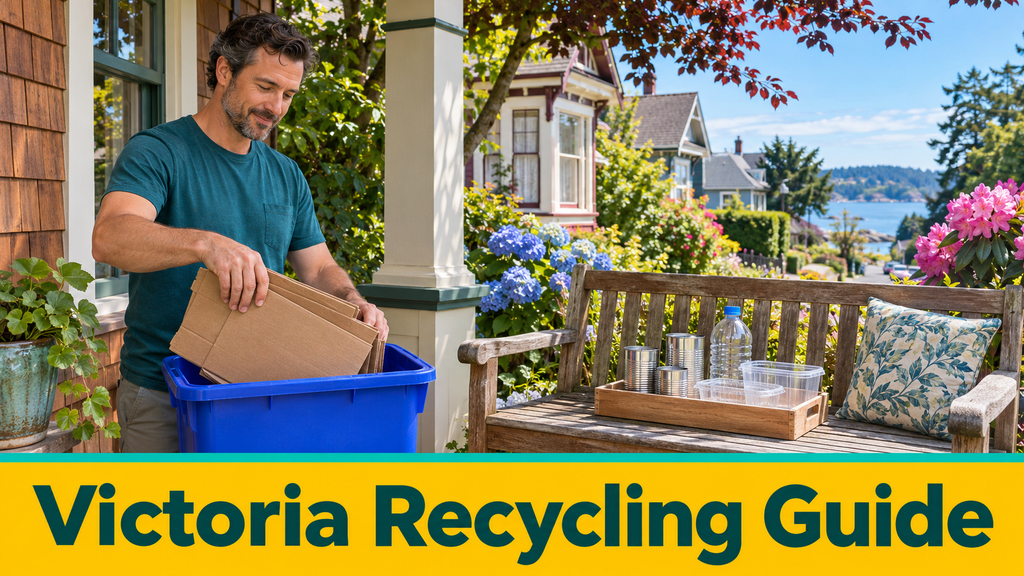
Recycling in Greater Victoria has its own system and sorting rules, and they differ in important ways from Metro Vancouver and other parts of BC. Paper goes in one container, glass goes in another, and soft plastics and foam need a trip to a depot or pop-up collection point.
Getting it right keeps recycling clean, avoids rejected pickups and helps conserve space at Hartland Landfill. This guide explains who runs recycling in the Victoria region, how the curbside blue box and blue bag work, how to handle glass, what goes to depots, how the Beyond the Curb programme works, the role of Hartland Depot, food scrap rules, household hazardous waste, costs and tips for apartments and businesses.
Table of Contents
Who Runs Recycling in Greater Victoria?
The Capital Regional District (CRD) manages curbside recycling across the region on behalf of Recycle BC. Under agreement with Recycle BC, the CRD provides over 123,000 single family homes in the region with curbside recycling service for packaging and paper products (PPP).
Municipalities handle other services such as garbage and kitchen scraps. As View Royal reminds residents, the blue box recycling program is administered by the CRD, while garbage and organics collection may be run locally.
| Service | Who Handles It |
|---|---|
| Blue box and blue bag recycling | CRD, under agreement with Recycle BC |
| Garbage collection | Your municipality or private hauler |
| Kitchen scraps (organics) | Your municipality |
| Landfill and main public depot | CRD (Hartland) |
| Deposit beverage containers | Return-It depots and retailers |
How Curbside Recycling Works
The Blue Box
The blue box is for containers and rigid packaging. Accepted materials include rigid plastic packaging from consumer goods and polycoated containers (e.g. broth and soup cartons), along with metal cans and similar household containers.
The Blue Bag
The blue bag keeps paper dry and separate. It accepts newspapers and mixed paper, including cardstock, cereal boxes and similar paper packaging. Keep paper clean and dry, and flatten boxes to fit.
Preparation Rules
- Put clean containers and plastic packaging only in the blue box.
- Place materials loosely in the blue box, not in bags.
- Take lids off containers and place them in your blue box.
- When your blue box is full, use another blue box or container of similar size. Plastic bags are not accepted.
- Shred or rip personal documents before placing at the curb and ensure they are safely secured in your blue bag.
Collection Day
Set out recycling on time. The CRD asks residents to set recycling out on recycling day by 7:30am. Recycling is generally collected every two weeks, so check your schedule on the CRD website.
Getting Bins and Bags
New residents can get supplies. In Central Saanich, the program provides residents with one CRD blue box and two blue bags per home, and replacements can be requested from the current collection contractor, GFL Environmental, at 236.470.0186.
Glass Goes Separately
Glass is one of the biggest differences in Victoria’s system. It must never be mixed with plastics, metal or paper.
- Accepted: clean glass bottles and jars.
- Place clean glass in a separate blue box or similar-sized plastic bin adjacent to your CRD blue box.
- Empty and rinse, labels are okay.
Do not use cardboard or bags for glass. Oak Bay notes that cardboard boxes and paper bags are NOT suitable receptacles for your glass containers.
What Does Not Go in the Blue Box
Some materials need to go elsewhere:
- Flexible plastics: Bags, wraps and pouches go to depots.
- Foam packaging: Foam trays, cups and protective foam go to depots.
- Refundable beverage containers: Take refundable beverage containers to a depot or retailer for refund.
- Hazardous items: Items like batteries, electronics (including cellphones and laptops), propane cylinders, pesticides, paint and motor oil are recyclable but they do not belong in the residential curbside blue box or household garbage.
- Non-packaging plastics: Items such as shower curtains, plastic patio furniture, plastic twine, photo paper and rigid plastic items that are not packaging are not part of the blue box programme.
Accepted items cannot be thrown away. The CRD states that all items accepted for recycling are banned from residential garbage.
Recycling Depots in the Victoria Area
Depots accept flexible plastics, foam, glass and other materials not collected curbside. Recycle BC lists several Victoria and area depots, including:
| Depot | Location |
|---|---|
| Hartland Recycling Depot | 1 Hartland Ave., Victoria |
| Island Return-It (Esquimalt) | 935 Ellery St., Victoria |
| Island Return-It (Sidney) | 10025 Galaran Rd., Sidney |
| Oak Bay Public Works | 1771 Elgin Rd., Victoria (Oak Bay residents only) |
| London Drugs locations | Tillicum, Colwood, Quadra and Yates |
For London Drugs, the CRD advises residents to contact London Drugs ahead to confirm they are accepting materials.
Beyond the Curb Programme
The CRD has launched convenient options for hard-to-recycle items.
Seasonal Market Pop-Ups
From May through October, the Beyond the Curb program accepts flexible plastics and foam at select community markets, making it easier than ever to recycle items that aren’t accepted through the curbside blue box program or through most apartment recycling. For example, a pop-up has operated at James Bay Market on Saturdays from 9am to 3pm.
Year-Round Hubs
The programme is growing. The CRD is expanding its Beyond the Curb drop-off program for recyclable materials with new year-round locations in Oak Bay and Langford, making it easier for residents to recycle a wider range of materials.
The CRD explains the purpose: recycling materials into new products reduces reliance on virgin materials, supports a circular economy, and helps to conserve the remaining capacity of Hartland Landfill. Staff at hubs are on-site to answer questions, guide residents on accepted materials, and help make recycling easier.
Hartland Landfill and Recycling Depot
Hartland is the region’s main disposal and recycling site. The public drop-off area at Hartland receives garbage, recyclables, product stewardship items and household hazardous waste. Over 80 items from 25 product categories are accepted for recycling.
Banned From Garbage
Many materials cannot be dumped at Hartland as garbage. There are a number of materials banned from disposal as garbage at Hartland, and most of these items are accepted for recycling at the Hartland Depot.
Sample Fees
Hartland charges by weight for many materials. A CRD user guide from March 2025 lists general refuse at $155 per tonne with a $10 bin fee charged once per visit, and clean wood (pallets, crating, lumber) at $80 per tonne. Check the latest fee schedule before visiting.
Large Items
Bulky items such as furniture and mattresses often need special handling. Residents may need to take them to Hartland or hire a junk removal service, depending on their municipality’s services.
Kitchen Scraps Rules
Food waste is restricted from garbage across the region. A landfill ban on food scraps and soiled paper products was put in place in January 2015. This includes scraps from fruits, vegetables, dairy, meat, grains, bones, and soiled paper products such as paper plates and napkins.
Central Saanich explains that the CRD is committed to diverting kitchen scraps from Hartland landfill, so kitchen scraps are restricted from your garbage. Use your municipal kitchen scraps bin or a home composter.
Household Hazardous Waste
Hazardous materials need safe disposal. Residents can find safe disposal options, including free drop off at the Hartland Depot, through the CRD Household Hazardous Waste page.
Common household hazardous items include:
- Paint, stains and solvents
- Pesticides and garden chemicals
- Propane cylinders
- Motor oil and antifreeze
- Batteries
- Fluorescent bulbs and tubes
Store these items safely until drop-off, keep them in original containers and never mix products.
Costs and Savings
Curbside recycling is funded through Recycle BC’s producer-paid system, so households do not pay a separate fee for blue box service itself. Garbage and organics fees are set by your municipality, and disposal at Hartland is charged by weight for many materials.
Ways to Save
- Recycle and compost as much as possible to reduce garbage volume.
- Return deposit containers for refunds.
- Use free drop-off options for household hazardous waste.
- Donate or sell usable furniture instead of paying disposal fees.
- Separate clean wood and yard waste, which may cost less to drop off than general garbage.
Tips for Apartment and Condo Residents
Many apartments do not offer the same collection as single-family homes, especially for flexible plastics and foam.
- Check your building’s sorting signs and bins.
- Keep a bag at home for soft plastics and foam to take to depots or Beyond the Curb.
- Ask your strata council or property manager about adding glass or organics bins.
- Share sorting guides with neighbours to reduce contamination.
Good waste practices can lower building costs and reduce pest and fire risks in garbage rooms, which matters for strata budgets and building insurance.
Tips for Businesses
Businesses in the CRD must also keep banned materials out of the garbage.
- Set up separate streams for cardboard, recyclables, organics and garbage.
- Work with a commercial hauler that offers recycling and organics services.
- Recycle electronics, batteries and lighting through stewardship programmes.
- Train staff on sorting rules and post signs near bins.
Proper sorting can reduce waste hauling costs and support sustainability goals.
Where to Get Help
- CRD Infoline: 250.360.3030 or infoline@crd.bc.ca
- Online search tool: Visit crd.ca/whatgoeswhere to find out where to take specific items.
- Recycling Council of BC Hotline: For other recycling questions, contact the RCBC Hotline at 1-800-667-4321.
Final Thoughts
Victoria’s recycling system relies on careful sorting: containers in the blue box, paper in the blue bag, glass in a separate bin, and flexible plastics and foam at depots or Beyond the Curb locations. Food scraps are restricted from garbage, and Hartland Depot accepts dozens of recyclable, stewardship and hazardous items.
Following these rules keeps recycling clean, avoids rejected pickups and helps extend the life of Hartland Landfill. When in doubt, check the CRD’s What Goes Where tool before putting an item at the curb.
Frequently Asked Questions
1. Can I put glass in my blue box in Victoria?
No. Clean glass bottles and jars must go in a separate blue box or similar bin next to your CRD blue box.
2. Where do I recycle plastic bags in Victoria?
Flexible plastics such as bags and wraps go to depots like Hartland, Island Return-It or Beyond the Curb drop-off locations.
3. Are food scraps allowed in the garbage in Greater Victoria?
No. Food scraps and soiled paper have been banned from the garbage at Hartland since January 2015. Use your kitchen scraps bin or a home composter.