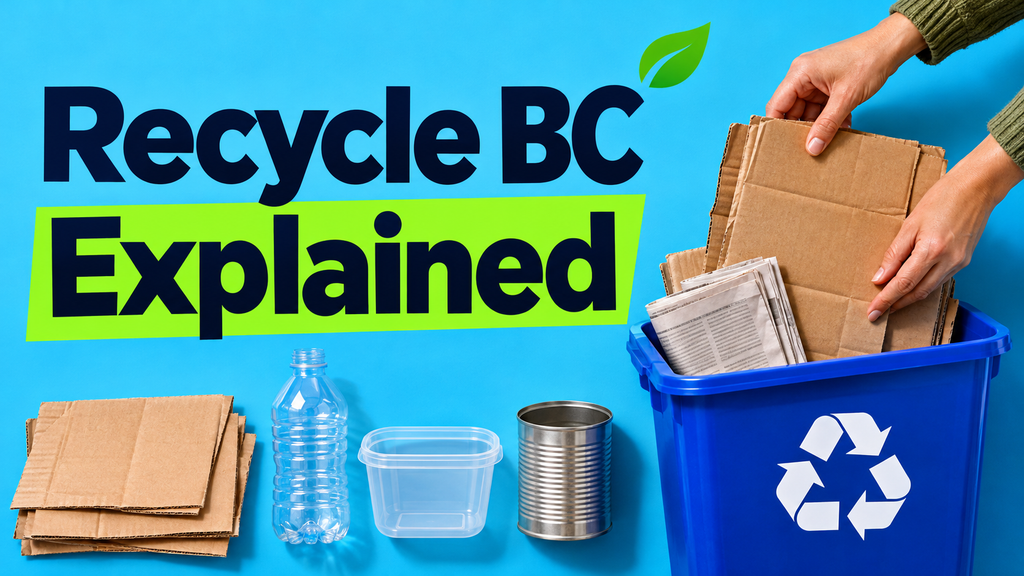
Recycle BC is the organisation behind most household recycling in British Columbia, from blue boxes at the curb to the depots where people drop off glass, foam and plastic bags. Many residents use it every week without knowing who runs it or how it is paid for.
Recycle BC is a not-for-profit organization responsible for residential packaging and paper recycling throughout British Columbia. It runs on a model called extended producer responsibility, where the companies that make and sell packaging pay for the system instead of homeowners. This guide covers how the programme works, who funds it, what materials it accepts, curbside and depot options, recent changes, and what businesses selling into BC need to know about their obligations.
Table of Contents
What Is Recycle BC?
It is the first full extended producer responsibility (EPR) program for packaging and paper product in North America, where producers are fully responsible for both the financing and operation of the province-wide residential recycling system. Recycle BC ensures household materials are collected from households and depots, sorted and responsibly recycled.
The programme has been running for more than a decade. Recycle BC was the first full EPR program for packaging and paper in North America, recently completing 11 years of operations.
| Feature | Details |
|---|---|
| Type of organisation | Not-for-profit producer responsibility organisation |
| Covers | Residential packaging and paper products |
| Funding model | Extended producer responsibility |
| Collection methods | Curbside, multi-family buildings and depots |
| Main material groups | Containers, paper, glass, flexible plastics, foam packaging |
| Coverage | Over 99 percent of BC residents |
How Extended Producer Responsibility Works
Under EPR, the businesses that put packaging and paper into the market take responsibility for what happens to it after use. In BC, producers are responsible for establishing or joining a non-profit EPR agency, commonly referred to as a producer responsibility organization (PRO). Recycle BC is that organisation for residential packaging and paper.
Who Pays
The program is funded by over 1,200 businesses that include retailers, manufacturers and restaurants that supply packaging and paper to BC residents, shifting costs away from homeowners. These businesses pay fees based on the type and amount of packaging they supply.
Why It Matters
EPR gives companies a financial reason to use less packaging and to design packaging that is easier to recycle. When harder-to-recycle materials cost more to manage, producers are encouraged to choose simpler, more recyclable options.
BC’s Broader EPR System
B.C. regulates the largest number of residential packaging and products in Canada through its extended producer responsibility programs, where companies and producers are responsible for the collection and recycling of the products they create. Other EPR programmes in the province cover items such as electronics, batteries and tires, while Recycle BC focuses on packaging and paper.
Recycle BC by the Numbers
The programme’s scale is significant. In 2024, Recycle BC achieved an overall program recovery rate of 83%, provided recycling service to over 99% of BC residents.
Its 2025 annual report shows continued growth, with 8 new depots added, 28 regional districts served, 206,756 tonnes of material managed by recycling, and 11,816 tonnes of collected material managed by disposal.
What Can You Recycle With Recycle BC?
Recycle BC organises accepted items into five main groups: Foam Packaging, Containers, Paper, Glass, Flexible Plastics. Exactly which items go in your blue box and which go to a depot depends on your community.
Containers
This group includes plastic bottles, jugs, tubs and lids, metal cans, aerosol cans, milk cartons, paper cups and similar household containers. Rinse containers lightly to remove food and liquid.
Paper
Newspapers, magazines, flyers, cardboard boxes, paper bags, envelopes and boxboard packaging such as cereal boxes are usually accepted. Flatten cardboard to save space.
Glass
Glass bottles and jars are typically collected separately from other recycling, either in a separate bin or at a depot, because broken glass contaminates paper and other materials.
Flexible Plastics
Plastic bags, overwrap, zipper pouches, crinkly wrappers and similar soft plastics are generally collected at depots rather than in blue boxes in most communities. Keep them clean and bundle them together.
Foam Packaging
Foam meat trays, foam cups and protective foam packaging are usually accepted at depots. Keep foam clean and separate from other materials.
Newer Single-Use Items
The programme has expanded over time. Following provincial changes, people throughout British Columbia will now find it easier and convenient to recycle a wider array of single-use plastic items and packaging products in their residential blue box or at participating recycling depots. These additions cover many “packaging-like” items such as some single-use plates, cups and cutlery.
What Does Not Belong in Recycle BC Bins
- Beverage containers with a deposit, which have their own return system
- Electronics, batteries and light bulbs, which are covered by separate programmes
- Food waste, which belongs in organics collection where available
- Garden hoses, toys and household items that are not packaging
- Heavily soiled packaging that cannot be cleaned
- Hazardous material containers unless specifically accepted
For different reasons, not all recyclable products sold to consumers are accepted in B.C.’s recycling programs. When in doubt, check before placing an item in the bin, because contamination raises costs for everyone.
Curbside, Multi-Family and Depot Collection
Curbside and Multi-Family Service
Most BC residents receive curbside or building recycling through their local government or a contractor working with the programme. Recycle BC is not directly responsible for your curbside or multi-family recycling service, but your community is likely part of the Recycle BC program. Contact your municipality or regional district for pickup days and local sorting rules.
Depots
Depots accept materials that are not collected curbside in many areas, such as glass, foam and flexible plastics. Recycle BC provides a depot locator through its website, and residents can use its tools to Find a Depot or check Upcoming Collection Events.
Mobile App
Recycle BC offers a mobile app for Apple and Android devices that helps residents look up items, check collection schedules in participating areas and find depots.
Recent Changes and Developments
New Programme Plan Approved
Recycle BC is excited to confirm the approval of its Packaging and Paper Product Extended Producer Responsibility Plan from the Ministry of Environment and Parks on September 17, 2025. Approval came after originally submitting the new Program Plan in April 2023.
The plan includes annual commitments pertaining to the types of packaging and paper not currently accepted for collection and detailed community eligibility criteria to identify priorities for future onboarding.
Merger With SK Recycles
SK Recycles and BC Recycle announced the amalgamation of their programs into one legal entity, effective January 1, 2026. The reorganization aims to simplify the organizational structure and create efficiencies and cost savings. Despite the merger, Recycle BC will continue to operate as a distinct program.
Wider EPR Expansion in BC
The province has also been adding new product categories. B.C. will expand extended producer responsibility programs to include mattresses, electric-vehicle batteries and medical sharps (e.g., syringes, lancets), as well as more moderately hazardous products, such as compressed-fuel canisters.
What Businesses Need to Know
If your company sells packaged goods or paper products to BC households, you may have obligations under the province’s Recycling Regulation.
Who Counts as a Producer
Producers can include brand owners, manufacturers, first importers, retailers, franchisors and online sellers that supply packaging and paper to BC residents. Restaurants and food service businesses that hand out takeaway packaging may also be included.
Main Obligations
- Join a programme: Most producers meet their obligations by joining Recycle BC rather than running their own system.
- Report supply data: Members report the weight and type of packaging and paper they supply into BC each year.
- Pay fees: Fees are based on material type and weight, with harder-to-recycle materials usually costing more.
- Follow reporting guidance: Recycle BC issues updates for specific categories, such as recent Automotive Container Reporting Changes announced in January 2026.
Small Business Considerations
Some very small producers may qualify for exemptions or simplified reporting depending on revenue or supply volume. Check current thresholds with Recycle BC before assuming your business is exempt.
Reducing Your Fee Costs
- Use less packaging where possible.
- Choose materials that are widely recyclable, such as paper, cardboard and common plastics.
- Avoid mixed-material packaging that is hard to separate.
- Track packaging data carefully to avoid over-reporting.
- Review packaging design annually as fee schedules change.
Costs and Benefits for Households and Communities
Lower Costs for Local Taxpayers
Because producers pay for recycling, local governments spend less on running collection, sorting and processing. That can help keep property taxes and utility fees lower.
Consistent Rules Across the Province
A single provincial programme means accepted materials are broadly similar across many communities, making it easier for residents who move or travel.
Environmental Benefits
High recovery rates mean less packaging in landfills, fewer new raw materials needed and lower greenhouse gas emissions from manufacturing.
Tips for Recycling Correctly in BC
- Rinse containers to remove food and liquid.
- Keep glass, foam and flexible plastics out of the blue box unless your community says otherwise.
- Do not bag recyclables unless your local rules ask you to.
- Remove caps and lids only if your community instructs you to.
- Use the Recycle BC app or website when unsure about an item.
- Return deposit beverage containers through the deposit system for a refund.
Final Thoughts
Recycle BC is one of North America’s most established packaging and paper recycling programmes. By making producers responsible for the full cost and operation of residential recycling, it reaches almost every household in British Columbia and achieves strong recovery rates.
For residents, the key is sorting correctly and using depots for materials such as glass, foam and flexible plastics. For businesses, understanding producer obligations, reporting accurately and designing more recyclable packaging can help control costs and support a cleaner province.
Frequently Asked Questions
1. Who pays for Recycle BC?
Recycle BC is funded by more than 1,200 businesses, including retailers, manufacturers and restaurants that supply packaging and paper to BC residents.
2. Can I put plastic bags in my blue box in BC?
In most communities, plastic bags and other flexible plastics should be taken to a depot rather than placed in the blue box. Check your local rules.
3. Is Recycle BC responsible for my curbside pickup?
Not directly. Curbside and multi-family services are usually handled by your local government or its contractor, but most communities are part of the Recycle BC programme.