Moving is one of the most wasteful times in a household’s life. Boxes, tape, bubble wrap, broken furniture, expired food, old electronics and bags of unwanted belongings can pile up quickly, and much of it ends up in the garbage simply because people run out of time.
With a little planning, you can move with far less waste, lower moving costs and a smoother transition into your new home. This guide covers how to declutter before a move, sell or donate unwanted items, choose sustainable packing supplies, handle food and hazardous items, manage moving day waste, dispose of large items responsibly, unpack efficiently and protect your belongings with the right insurance and planning.
Table of Contents
Why Moving Creates So Much Waste
- Last-minute decluttering: Items get thrown out when there is no time to sell or donate them.
- Single-use packing materials: Tape, plastic wrap and foam peanuts often go straight in the bin.
- Food waste: Fridges, freezers and pantries are emptied in a rush.
- Bulky items: Mattresses, furniture and appliances are hard to move or dispose of.
- Hazardous products: Paint, cleaning products and propane tanks cannot travel with many movers.
Planning ahead is the key to cutting waste and saving money.
Start Early: A Moving Waste Timeline
| Time Before Move | Tasks |
|---|---|
| 8 weeks | Start decluttering room by room; book movers or rental truck |
| 6 weeks | List items for sale; arrange donation pickups |
| 4 weeks | Collect free boxes and packing materials |
| 3 weeks | Plan meals to use up food; dispose of hazardous products |
| 2 weeks | Pack non-essentials; book large item pickup or junk removal |
| 1 week | Pack most rooms; prepare essentials box |
| Moving day | Sort waste, recycle packaging and clean as you go |
| After move | Unpack, recycle boxes or pass them on |
Declutter Before You Pack
The less you move, the less you pay and the less you waste.
Room-by-Room Decluttering
- Closets: Remove clothing you have not worn in a year.
- Kitchen: Donate duplicate utensils, appliances you rarely use and extra dishes.
- Bathroom: Toss expired products and use up partly full bottles.
- Garage and storage: Sort tools, sports gear and seasonal items.
- Kids’ rooms: Pass on outgrown toys, books and clothes.
- Paperwork: Shred old documents and digitise important files.
Sorting System
Use four categories:
- Keep: Items you use and love.
- Sell: Valuable items in good condition.
- Donate: Usable items you no longer need.
- Recycle or dispose: Broken or worn-out items.
Sell Unwanted Items
Selling helps fund your move and keeps items in use.
Where to Sell
- Online marketplaces and community buy-and-sell groups
- Consignment stores for furniture, clothing and décor
- Garage or moving sales
- Specialty buyers for electronics, books and collectibles
Selling Tips
- Take clear photos in good lighting.
- Price items competitively for a quick sale.
- Bundle small items together.
- Start selling early to avoid last-minute stress.
Money from selling unwanted items can help cover moving truck rentals, cleaning deposits or new essentials.
Donate What You Can
Many charities accept household goods, furniture, clothing and books.
- Book furniture pickups several weeks before your move, as slots fill quickly.
- Clean items before donating.
- Check what each charity accepts.
- Ask registered charities whether they issue tax receipts for valuable items.
- Donate unopened food to local food banks.
Moving at the end of the month is common, so plan donations early to avoid crowded charity schedules.
Choose Sustainable Packing Supplies
Boxes
- Ask local stores, liquor shops and friends for used boxes.
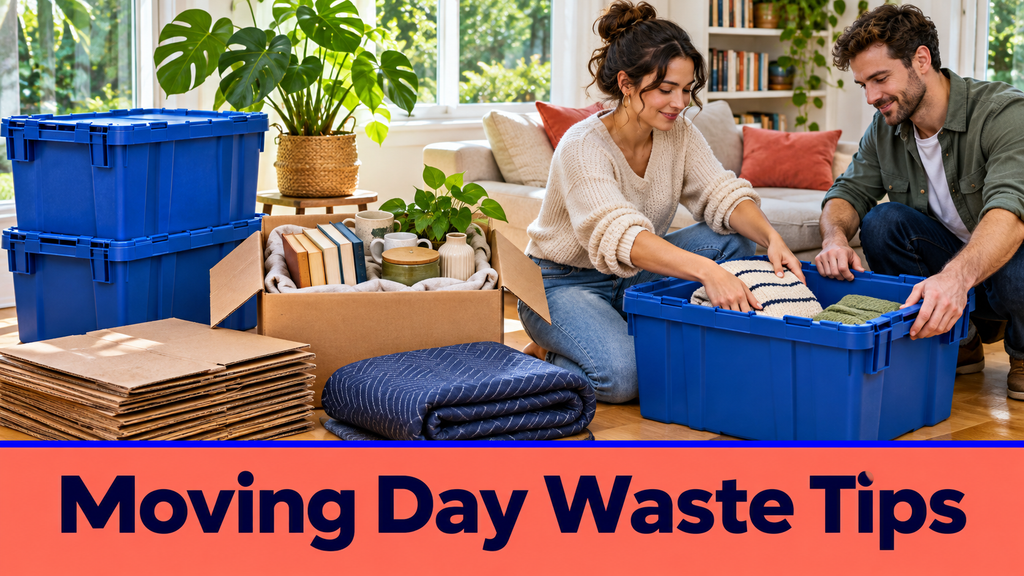
- Rent reusable plastic moving crates from moving supply companies.
- Use suitcases, laundry baskets and storage bins you already own.
- Keep boxes from past moves flattened for future use.
Packing and Cushioning Materials
| Instead of | Try |
|---|---|
| Bubble wrap | Towels, blankets and sweaters |
| Packing peanuts | Crumpled newspaper or paper packing |
| Plastic stretch wrap | Moving blankets and straps |
| New packing paper | Old newspapers, flyers or tissue paper |
| Plastic bags for small items | Zip pouches, socks or small containers |
Packing Tips
- Wrap dishes in tea towels and cloth napkins.
- Fill pots and pans with spices or small kitchen items.
- Use clothing to cushion fragile items.
- Label boxes clearly to avoid unpacking chaos.
Plan Ahead for Food
Use Up Food Before Moving
- Plan meals around what is in your fridge, freezer and pantry.
- Avoid big grocery trips in the final weeks.
- Cook freezer meals early and eat them before the move.
- Give perishable food to friends, neighbours or community fridges.
Donate Non-Perishables
Unopened cans, dry goods and packaged foods can be donated to food banks.
Compost Food Scraps
Compost leftover scraps instead of throwing them in the garbage. Check whether your new home has organics collection so you can continue composting.
Handle Hazardous Items Safely
Many movers will not transport hazardous products.
Common Items Movers Refuse
- Paint and paint thinner
- Propane tanks and gas cans
- Pesticides and fertilisers
- Pool chemicals
- Aerosol cans
- Cleaning chemicals
- Car batteries
What to Do
- Use up products before moving.
- Give usable leftovers to friends or neighbours.
- Take paint, chemicals and batteries to approved recycling depots.
- Empty fuel from lawnmowers and other equipment safely.
Never pour chemicals down drains or throw them in the garbage.
Disposing of Large Items
Furniture
- Sell or donate items in good condition.
- Ask charities about pickup services.
- Recycle metal and wood components where possible.
Mattresses
Many areas ban mattresses from regular garbage. Use mattress recyclers, municipal programmes or retailer take-back services.
Appliances
- Sell working appliances.
- Ask appliance retailers about take-back when buying new.
- Use local recycling programmes for refrigerators and freezers, which contain refrigerants.
Electronics
Take old electronics to e-waste recycling depots. Wipe personal data from computers and phones first.
Junk Removal Services
If you have many large items, hire a junk removal company that donates and recycles items whenever possible. Ask how they handle donations and get a written quote.
Managing Waste on Moving Day
Set Up a Waste Station
Create a clear system for moving day:
- Recycling bin for cardboard and paper
- Bag for soft plastics to take to a depot
- Garbage bag for true waste
- Box for donations
- Box for items to return to friends or neighbours
Clean As You Go
- Use reusable cloths and refillable cleaning sprays.
- Keep a cleaning kit separate so it is easy to find.
- Wipe down cupboards and appliances once emptied.
Feed Your Helpers Without Waste
- Serve drinks in reusable bottles or a large water jug.
- Order food from places that use minimal packaging.
- Use real plates or compostable options.
Protect Your Belongings and Budget
Moving Insurance
Professional movers usually offer basic liability coverage, but it may be limited based on weight rather than value. Consider:
- Reviewing your home or tenant insurance to see if it covers items during a move
- Buying additional moving insurance for valuable items
- Taking photos of furniture and electronics before packing
- Keeping receipts and an inventory list
Choosing Movers
- Get written quotes from several companies.
- Check reviews and licensing.
- Ask about extra fees for stairs, long carries or heavy items.
- Confirm what items they refuse to move.
Budgeting Tips
| Moving Cost | Ways to Save |
|---|---|
| Moving company or truck rental | Move fewer items, book weekdays or mid-month |
| Packing supplies | Use free and reusable materials |
| Junk removal | Sell or donate items early |
| Cleaning | Do it yourself with simple supplies |
| Storage units | Declutter to avoid needing extra space |
Moving mid-month or mid-week can sometimes lower moving company rates.
Unpacking With Less Waste
Reuse or Pass On Boxes
- Flatten and store boxes for future use.
- Give boxes to friends or neighbours who are moving.
- Post boxes for free on community marketplaces.
- Recycle damaged boxes in cardboard recycling.
Avoid Buying Too Much New
- Live in your new space for a few weeks before buying new furniture.
- Shop second-hand for items you still need.
- Measure rooms carefully before buying.
Set Up Recycling and Compost Early
Learn your new area’s recycling and organics rules right away. Set up labelled bins in your kitchen so good habits start on day one.
Moving With Kids and Pets
- Involve children in decluttering and donating toys.
- Pack a reusable bag of snacks, water and comfort items for moving day.
- Keep pet food, bowls and bedding easy to access.
- Use reusable containers for snacks and meals during the move.
Moving Day Waste Checklist
- Declutter at least six weeks before moving
- Sell and donate unwanted items early
- Collect free and reusable boxes
- Use towels and clothing as padding
- Plan meals to use up food
- Dispose of hazardous items at approved depots
- Arrange mattress and furniture disposal
- Set up a moving day waste station
- Check moving insurance coverage
- Pass on or recycle boxes after unpacking
Final Thoughts
Moving does not have to create mountains of waste. Starting early, decluttering thoughtfully, selling and donating items, using reusable packing materials and planning for food and hazardous products can cut waste dramatically and save money.
A well-organised move also means less stress on moving day and an easier start in your new home. Take it one step at a time, and your move can be both efficient and environmentally friendly.
Frequently Asked Questions
1. How can I reduce waste when moving?
Declutter early, sell or donate unwanted items, use reusable or free packing materials, plan meals to use up food and recycle boxes after unpacking.
2. What should I do with hazardous items before moving?
Use them up, give them away or take them to approved recycling depots. Many movers will not transport paint, chemicals, propane or batteries.
3. Where can I get free moving boxes?
Ask local stores, friends and community groups, check online marketplaces or reuse boxes you already have.