Old phones, laptops, TVs and printers pile up quickly in most homes and offices. Throwing them in the garbage is not only wasteful, it can release harmful materials into the environment and expose personal data.
British Columbia has a well-established system for recycling electronic waste, often called e-waste. This guide explains how the province’s main electronics recycling programme works, who runs it, what you can drop off, the environmental handling fee you pay on new products, how businesses can recycle large volumes, how to protect your data before recycling, and how to choose between reuse, repair and recycling.
Table of Contents
How E-Waste Recycling Works in BC
BC uses an extended producer responsibility (EPR) model for electronics. That means the companies that make and sell electronics are responsible for collecting and recycling them at end of life.
Return-It Electronics collects electronic waste for EPRA BC – a not-for-profit extended producer responsibility program set up by the major B.C. producers and retailers of electronics. Since its launch in 2007, the Return-It Electronics program has collected over 80 million kilograms of electronic waste.
| Feature | Details |
|---|---|
| Programme name | Return-It Electronics |
| Run on behalf of | Electronic Products Recycling Association (EPRA) BC |
| Operations partner | Encorp Pacific (Canada) |
| Funding | Environmental Handling Fee (EHF) on new products |
| Cost to drop off accepted items | Free at designated sites |
| Launched | 2007 |
Who Runs It
The Electronic Products Recycling Association (EPRA) is comprised of major producers and retailers of electronics in BC. EPRA has contracted Encorp Pacific (Canada), under the Return-It brand, to manage certain operations with respect to the Stewardship plan.
The programme serves everyone in the province. BC’s Return-It Electronics is a province-wide, end-of-life electronics recycling program available to all consumers and businesses in British Columbia.
Why E-Waste Recycling Matters
Electronics contain metals, plastics, glass and sometimes hazardous substances. Many electronic items contain components that can cause environmental damage when thrown in the landfill.
Recycling has clear benefits. By recycling your used electronics, you divert waste from your local landfills and help the environment. You also reduce the need for raw materials to manufacture new products.
Using approved collection sites also helps keep devices out of irresponsible hands. When you bring old, unusable electronics to Return-It’s collection sites you prevent e-waste from being illegally exported or handled by irresponsible recyclers.
BC E-Waste by the Numbers
The province collects large volumes each year. Nearly 13,000 metric tons of e-waste were diverted from provincial landfills in 2023, equivalent to 2.3 kilograms per person in B.C.
EPRA’s 2023 report notes 238 permanent collection sites and 4 verified processors in British Columbia, and that in 2023, EPRA BC safely collected and responsibly recycled 12,899 tonnes of end-of-life electronics. Other reports describe more than 300 Return-it sites across B.C. that accept e-waste, depending on how collection points are counted.
What Electronics Can You Recycle?
Return-It Electronics accepts a wide range of end-of-life devices. Common categories include:
- Display devices: Televisions, computer monitors and laptops
- Computers: Desktop computers, laptops, tablets and servers
- Computer accessories: Keyboards, mice, cables and external drives
- Printers and imaging equipment: Printers, scanners, fax machines and copiers
- Audio and video equipment: Speakers, stereos, DVD players and game consoles
- Telecommunications devices: Phones and some networking equipment
- Small personal electronics: E-readers, GPS units and similar devices
Return-It publishes a detailed list called Acceptable Electronics Products, with a full list of the acceptable products in the Return-It Electronics Program. The network has also added newer categories, with depot materials covering items such as E-bikes & E-scooters.
Items That Need Special Handling
Broken screens are treated differently. Monitors and televisions with smashed screens are considered hazardous materials under provincial regulations and can only be accepted at specific locations as they require special handling procedures. Call ahead before bringing damaged screens.
Items Covered by Other Programmes
Some products are handled by separate BC stewardship programmes, such as household batteries, light bulbs, small appliances, power tools and large appliances. Return-It also provides information on How to Recycle Large Appliances.
If you are unsure where an item belongs, Recycling Council of BC suggests visiting RCBC’s Recyclepedia for drop-off options or contact the RCBC Recycling Hotline for all options available in your community.
The Environmental Handling Fee (EHF)
When you buy a new electronic product in BC, you usually pay a small fee that funds future recycling.
How the EHF Works
The program is funded by an Environmental Handling Fee (EHF) that is remitted to EPRA on the sale of designated products in, or into, the province. Consumers pay the designated EHF at the time of purchase. The fee will only be paid once in the supply chain.
What the EHF Is Not
EPRA explains that the EHF is not a tax, nor is it a refundable deposit. Unlike bottle deposits, you do not get money back when you return an old device.
Why You Pay It
EHFs on the sale of new products assist in covering the cost of responsible recycling of electronics currently in the waste stream. 100% of the program revenue is used for the administration, collection, transportation, and responsible recycling of unwanted electronics.
The fee amount varies by product type, because Environmental Handling Fees (EHFs) reflect the cost of recycling the item you are purchasing. The EHF may appear on your sales receipt.
Where to Drop Off E-Waste
Return-It Electronics Collection Sites
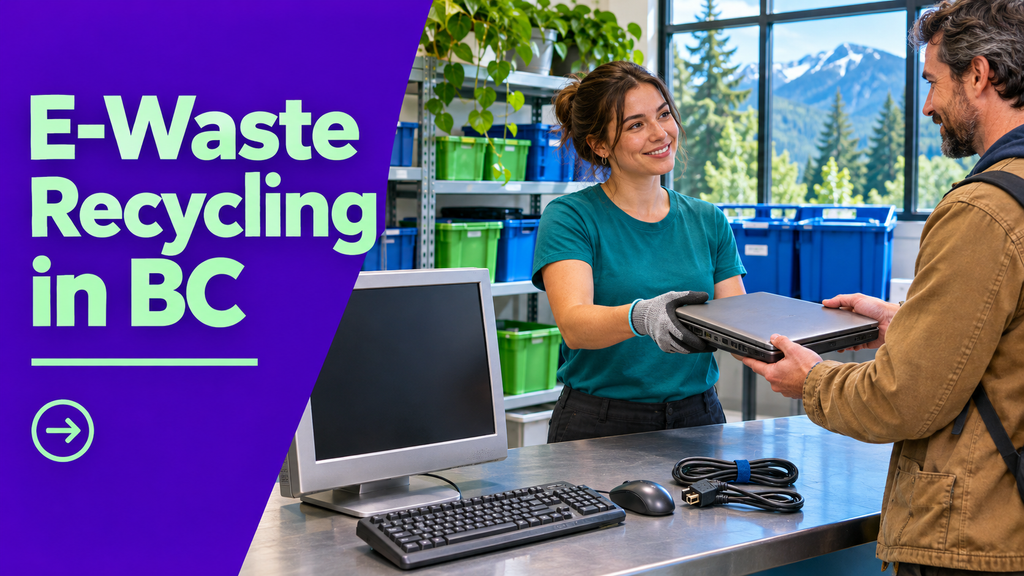
The simplest option is a designated collection site. You can drop off any of the acceptable products at designated Return-It Electronics Collection Sites without charge, and they will be recycled responsibly. Use the Return-It location finder to locate the nearest site.
Pick-Up Services
Home pick-up is limited. Return-It Electronics does not directly offer pick-up services at this time. Some private haulers and junk removal companies collect electronics for a fee and take them to approved sites.
Retailers and Community Events
Some electronics retailers and community recycling events also accept devices. Confirm that they work with the approved programme so your items are recycled properly.
E-Waste Recycling for Businesses
Offices, schools, hospitals and other organisations often replace large numbers of computers and devices at once.
Free Drop-Off and Large Volume Pickup
EPRA’s business guidance states there is no cost for drop off at EPRA BC Depots. For bigger loads, pick up services for large volumes (i.e.: 3 pallets or more) of unwanted electronics is provided at no cost provided certain requirements have been met.
Business-to-Business Options
EPRA also provides information on business-to-business options, useful for organisations that need certified data handling, asset tracking or custom logistics.
Producer Obligations
Companies that sell electronics in BC may have legal duties. Return-It notes that if you import electronics into British Columbia for sale or distribution you are obligated. Obligated producers typically join EPRA, report sales and remit EHFs.
Protect Your Data Before Recycling
Phones, computers and tablets often store personal photos, emails, banking apps and passwords. Before recycling:
- Back up your files: Save important data to cloud storage or an external drive.
- Sign out of accounts: Log out of email, cloud services and app stores.
- Remove SIM and memory cards: Keep or destroy them separately.
- Factory reset devices: Use the built-in reset option on phones, tablets and laptops.
- Wipe or destroy hard drives: For computers with sensitive data, use secure wiping software or physically destroy the drive.
- Remove devices from accounts: Unlink phones and tablets from find-my-device and account settings.
Return-It provides guidance on How to Wipe Your Device. Businesses handling client data should use certified data destruction services and keep records for compliance and cyber insurance purposes.
Reuse, Repair or Recycle?
Recycling is the right choice for devices that no longer work, but many electronics still have value.
| Option | Best When | Benefit |
|---|---|---|
| Repair | Device has a fixable fault | Saves money and extends product life |
| Resell | Device still works and is relatively new | Recovers part of the original cost |
| Donate | Device works but is no longer needed | Helps schools, charities or families |
| Trade-in | Buying a new device from a retailer or carrier | Credit towards new purchase |
| Recycle | Device is broken, outdated or unsafe | Responsible handling of materials |
Return-It also promotes reuse through materials on Protecting the Environment Through Reuse. Choosing reuse or repair before recycling keeps devices in use longer and reduces overall waste.
How Electronics Are Recycled
Once collected, electronics are sent to approved processors. Devices are sorted, dismantled and separated into materials such as metals, plastics, glass and circuit boards. Hazardous components are removed and handled safely, while valuable materials are recovered for use in new products.
EPRA focuses on ensuring responsible recycling of end-of-life electronics through adherence to the Electronics Recycling Standard (ERS), which sets requirements for environmental, health and safety controls at recycling facilities.
Tips for Recycling E-Waste in BC
- Gather old devices from drawers, closets and storage once or twice a year.
- Remove batteries where possible and recycle them through the battery programme.
- Tape exposed battery terminals to prevent fire risks.
- Keep cords and accessories with devices when dropping off.
- Call ahead with broken screens or unusual items.
- Wipe personal data before handing over any device.
Final Thoughts
E-waste recycling in BC is easy and free at designated sites thanks to the Return-It Electronics programme run for EPRA BC. The Environmental Handling Fee you pay on new devices funds the collection, transport and responsible recycling of old electronics, keeping harmful materials out of landfills and recovering valuable resources.
Before recycling, consider repair, resale or donation, and always protect your personal data. For businesses, free large-volume pickup and business-to-business options make it simple to manage electronics responsibly.
Frequently Asked Questions
1. Is it free to recycle electronics in BC?
Yes. Accepted electronics can be dropped off at designated Return-It Electronics collection sites at no charge.
2. What is the environmental handling fee on electronics?
The EHF is a non-refundable fee charged on new electronics sold in BC. It funds the collection and recycling of end-of-life electronics and is not a tax or deposit.
3. Can businesses recycle large amounts of electronics in BC?
Yes. Businesses can drop off electronics free at EPRA BC depots, and free pickup is available for large volumes of three pallets or more when requirements are met.