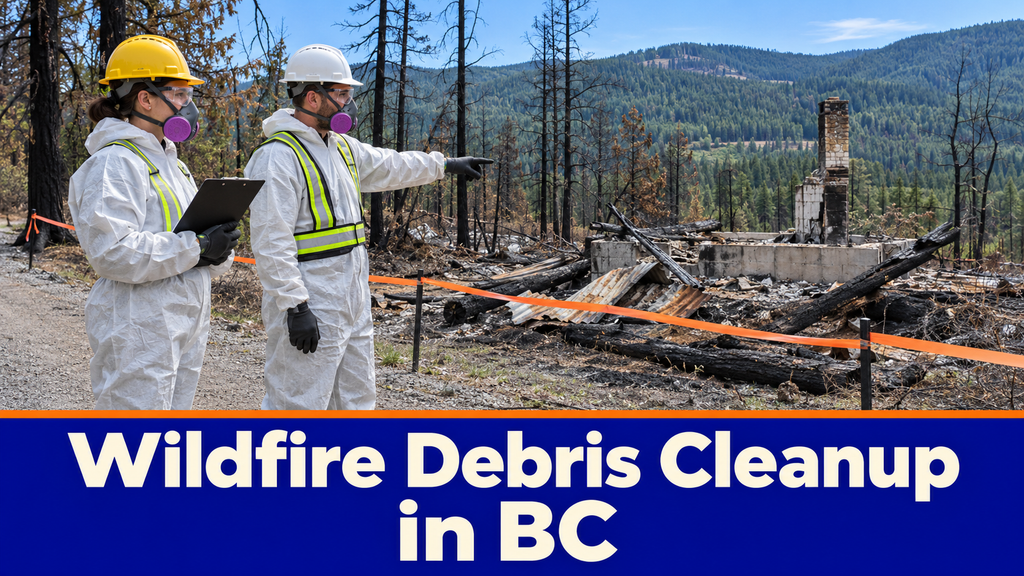
Returning to a property after a wildfire is emotionally and physically overwhelming. Beyond the loss of homes, outbuildings and belongings, property owners face piles of ash, burnt materials, damaged vehicles and hazardous substances that must be handled carefully before rebuilding can begin.
Wildfire debris is not ordinary garbage. Burned buildings can contain asbestos, lead, chemicals and other contaminants, and regional districts in British Columbia have strict rules for testing, handling and disposal. This guide explains how to return safely, the main hazards in wildfire debris, the hazardous materials survey process, how to work with insurance, financial help that may be available, disposal rules for different types of debris, hiring contractors and protecting your health during cleanup.
Table of Contents
Before You Return: Safety First
Never rush back to a fire-damaged property. The Squamish-Lillooet Regional District (SLRD) is clear: do not return until officials say it is safe: an evacuation order must be rescinded before you go back.
Property owners should follow any site-specific direction from the SLRD, your local government, First Nation, health authority, utility provider, BC Wildfire Service or other responsible agency.
Common Hazards After a Wildfire
Officials warn about many dangers on burned properties:
- Ash pits: Ash pits where trees or stumps burned below ground can cause serious burns or falls.
- Contaminated debris: Asbestos, lead, treated wood, chemicals or other contaminants in structural debris.
- Carbon monoxide: Carbon monoxide from operating pumps, generators or pressure washers in confined spaces.
- Unstable structures: Fire-damaged buildings and other structures may be hazardous, and standing chimneys are hazardous.
- Dangerous trees: Falling branches, ash pits, damaged roots and weakened trunks.
- Toxic fumes and materials: Burning debris may contain cyanide, sulphur dioxide, asbestos, and other hazardous materials can include septic tank material, contaminated soils and PCBs.
- Inhalation hazards: Fiberglass, smoke particulates and mould.
Before entering wooded areas, talk to your insurance company about getting a dangerous tree assessment done on your property.
Wildfire Debris Is Special Waste
Fire debris requires careful handling. The SLRD advises: do not disturb or transport structural ash or debris until hazardous materials have been assessed. Burned structures may contain asbestos, lead, treated wood and other contaminants, and a hazardous materials survey may be required.
Common types of wildfire debris include:
| Debris Type | Examples | Special Considerations |
|---|---|---|
| Ash | Structural and household ash | May contain asbestos and toxic residues |
| Burned buildings | Walls, roofing, insulation | Must be tested before removal |
| Concrete and masonry | Foundations, chimneys, bricks | May be accepted separately at some sites |
| Metals | Roofing, appliances, frames | Often recyclable after decontamination |
| Burned vehicles | Cars, ATVs, snowmobiles, RVs | Fluids and batteries need removal |
| Appliances | Fridges and freezers | Refrigerants and spoiled food |
| Vegetation | Burned trees, stumps, brush | May be handled as green waste |
| Hazardous waste | Chemicals, propane tanks, batteries | Separate disposal required |
| Animal carcasses | Livestock or pets | Special handling and approval |
Step 1: Contact Your Insurance Provider First
Insurance is usually the first call. The SLRD notes: always check with your insurance provider first regarding the disposal of solid waste related to wildfires. Insurance may cover the costs of the Hazardous Waste Materials Survey, removal and disposal.
Insurance Tips
- Take photos and videos of all damage before cleanup begins.
- Keep receipts for all cleanup expenses, accommodation and supplies.
- Ask whether your policy includes debris removal coverage and any limits.
- Confirm whether hazardous materials testing and abatement are covered.
- Ask about coverage for tree removal, outbuildings, fences and vehicles.
- Request written approval before hiring contractors where needed.
Many home insurance policies include debris removal as part of dwelling coverage, sometimes with a separate limit. Understanding your policy helps avoid unexpected out-of-pocket costs.
Step 2: Get a Hazardous Materials Survey
A hazardous materials survey is often required before any debris can be moved.
What the Survey Does
This survey tests for asbestos and toxic contamination before any disposal of debris or waste. Burnt buildings and residual ash may contain hazardous materials such as asbestos and toxic chemicals and are subject to special disposal regulations to protect the health and safety of workers and the public.
Who Can Do It
Property owners should hire a WorkSafeBC-approved licensed contractor to perform the Hazardous Materials Waste Survey.
Submitting Results
In the SLRD, once the survey is conducted and the results are given to you, email the survey report along with a completed Asbestos Declaration and Acknowledgement Form to the SLRD. Advance notice of 10 days is required before waste disposal.
If asbestos or toxic materials are found, review the Province’s Hazardous Waste Regulation or contact an asbestos abatement company to deal with this hazardous material on your behalf.
Step 3: Contact Your Regional District Before Hauling
Each regional district sets its own rules and disposal locations. The SLRD stresses: call before handling debris: wildfire debris require pre-approval, special handling and disposal at a designated facility. Contact the SLRD before handling, loading and transporting any materials impacted by wildfire.
Other regions publish detailed plans. In the Central Okanagan, the RDCO’s Debris Waste Management Plan describes the types of wastes considered in the plan, such as green waste, tree waste, construction/renovation/demolition debris, bulky solid waste, concrete, metals, white goods, hazardous waste goods, and e-waste, and explains where wildfire debris wastes can be recycled or disposed of, and what requirements and conditions apply for each waste stream.
Facility Capacity
Disposal sites can have limits. For example, the SLRD has advised that the Gold Bridge Transfer Station is accepting ash, but residents should call ahead, as there is a maximum capacity for ash before removal must occur, and the site has at times been unable to accept concrete debris.
Step 4: Hire Qualified Contractors
Wildfire cleanup is not a do-it-yourself job for most structural debris. The SLRD strongly suggests, as per WorkSafeBC guidance, working with an Abatement Company for wildfire debris and waste disposal.
Choosing a Contractor
- Confirm the company is licensed and WorkSafeBC-approved for asbestos work.
- Ask for proof of liability insurance and WorkSafeBC coverage.
- Get multiple written quotes.
- Check references and reviews.
- Make sure the quote includes testing, removal, transport and disposal fees.
- Avoid door-to-door contractors who demand large upfront payments.
Before Asbestos Removal
The SLRD asks property owners to provide the name of the licensed contractor and your Hazardous Materials Waste Survey report before any removal of asbestos-contaminated debris. Based on the results of your report, the SLRD will provide instructions on how and where to dispose of the debris.
Financial Help for Debris Cleanup
Cleanup can be expensive, especially for people without full insurance coverage.
Regional Reimbursement Programs
Some regional districts offer support for under-insured owners. In the SLRD, a Hazardous Material Survey reimbursement program is available for under/uninsured property owners.
Charity and Provincial Partnerships
After past fires, partnerships have funded debris programs. For example, the Canadian Red Cross and Emergency Management BC agreed to fund a Wildfire Disaster Debris Removal Program within the Thompson-Nicola Regional District for property owners impacted by the 2021 wildfires.
Disaster Financial Assistance
The province offers Disaster Financial Assistance for some events. Program staff are available to discuss how your insurance relates to your eligibility and application. Eligibility often depends on whether losses were insurable, so check carefully.
Tax Relief
Some property owners may qualify for help with property taxes. The SLRD points residents to information on the Province of BC’s tax deferral program.
Advocacy for More Support
Local governments continue to push for more help. At the 2026 Union of BC Municipalities convention, regional district staff advocated for things like waiving provincial sales tax for people trying to rebuild and help with debris removal.
Disposal Tips by Debris Type
Ash
Do not spread, bury or dump ash. Keep it damp to reduce dust, and only move it once testing is complete and disposal is approved.
Concrete and Masonry
Concrete may be accepted separately or recycled, depending on the facility. Confirm whether it must be tested first.
Metals
Scrap metal can often be recycled after hazardous materials are removed.
Burned Vehicles
Burnt vehicles, ATVs and snowmobiles may need fluids, batteries and tires removed before disposal at designated sites. Contact your regional district or a licensed auto recycler.
Fridges and Freezers
Appliances containing refrigerants and spoiled food require special handling. Do not open freezers full of rotten food indoors; follow local instructions.
Trees and Vegetation
Stumps, branches and shrubs, whether burnt or unburnt, may be accepted as green waste at designated sites. Hire a qualified arborist for hazardous trees.
Avoid Illegal Dumping
Illegal dumping makes recovery harder for everyone. Illegal dumping is the deliberate disposal of waste materials onto public or private land where no license or approval exists to accept such waste.
Dumped waste can be dangerous to people and wildlife, particularly when it includes sharp objects, glass, asbestos and other hazardous materials. Report illegal dumping to your regional district or the province.
Protecting Your Health During Cleanup
Personal Protective Equipment
- N95 or better respirator
- Heavy-duty gloves
- Long sleeves and long pants
- Sturdy boots with thick soles
- Safety glasses or goggles
- Disposable coveralls for ash exposure
Health Tips
- Avoid working alone on damaged properties.
- Take breaks and stay hydrated.
- Wash hands and face before eating or drinking.
- Keep children and pets away from debris.
- Change and wash clothes after each cleanup session.
- Seek medical help for breathing problems, burns or injuries.
Recovery can also take an emotional toll. Reach out to family, friends, community support services or mental health resources if you feel overwhelmed.
Planning for Rebuilding
Once debris is cleared, you can begin planning to rebuild.
- Obtain soil testing if contamination is suspected.
- Check permit requirements, including whether a riparian permit is needed near waterways.
- Consult with insurers about rebuilding coverage and timelines.
- Consider FireSmart building materials and landscaping.
- Review your insurance policy limits to ensure they match current rebuilding costs.
Wildfire Debris Cleanup Checklist
- Wait until the evacuation order is rescinded
- Document damage with photos and videos
- Contact your insurance provider
- Hire a WorkSafeBC-approved contractor for a hazardous materials survey
- Submit survey results and forms to your regional district
- Get approval before moving or hauling debris
- Hire a licensed abatement company for hazardous materials
- Use designated disposal facilities only
- Keep all receipts and records
- Ask about reimbursement and financial assistance programs
Final Thoughts
Wildfire debris cleanup in BC is a complex process that requires patience, careful planning and professional help. Burned structures and ash can contain asbestos and toxic chemicals, so testing, approval and proper disposal are essential to protect your health and the health of workers and neighbours.
Start with your insurance provider, follow your regional district’s rules, use qualified contractors and take advantage of any reimbursement or assistance programs available. With the right steps, you can safely clear your property and begin the journey toward rebuilding.
Frequently Asked Questions
1. Can I clean up wildfire debris myself in BC?
Small, non-hazardous cleanup may be possible, but structural ash and debris should not be disturbed until a hazardous materials survey is completed. Regional districts recommend working with licensed abatement companies.
2. Does home insurance cover wildfire debris removal?
Many policies include debris removal coverage, sometimes with separate limits. Contact your insurer before starting cleanup to confirm what is covered.
3. What is a hazardous materials survey?
It is a test performed by a licensed contractor to check for asbestos and toxic contamination in burned buildings and ash before debris is removed or disposed of.