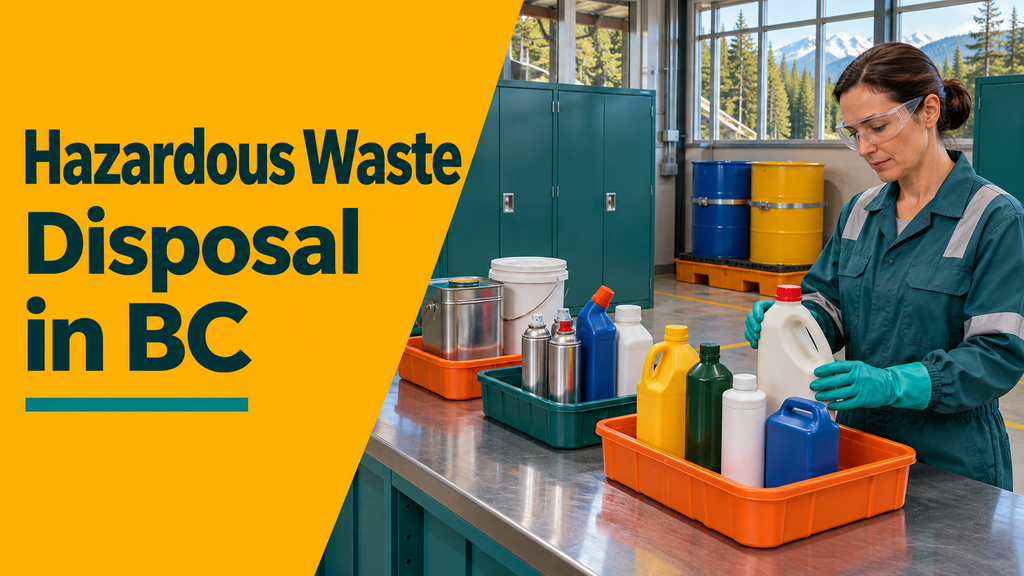
Most homes and businesses have hazardous products tucked away in garages, basements and under sinks. Old paint, solvents, pesticides, propane cylinders, batteries, motor oil and cleaning chemicals can harm people, pets, wildlife and waterways if they are thrown in the garbage or poured down the drain.
British Columbia has a network of free and low-cost programmes for disposing of household hazardous waste safely, many funded by the companies that make these products. This guide explains what counts as household hazardous waste, the main BC disposal programmes, regional drop-off options, rules in Metro Vancouver and other regions, safe storage and transport, how businesses must handle hazardous waste and tips for reducing hazardous products at home.
Table of Contents
What Is Household Hazardous Waste?
Household hazardous waste (HHW) includes leftover products that are toxic, flammable, corrosive or reactive. They are dangerous to collection workers, can cause fires in garbage trucks and facilities, and may contaminate soil and water.
| Category | Common Examples |
|---|---|
| Paints and coatings | Latex and oil-based paint, stains, varnishes, spray paint |
| Flammable liquids | Gasoline, paint thinner, solvents, lighter fluid |
| Pesticides | Weed killers, insecticides, rodent poisons |
| Automotive products | Motor oil, antifreeze, oil filters, car batteries |
| Batteries | Household, rechargeable and lithium-ion batteries |
| Lighting | Fluorescent tubes and compact fluorescent bulbs |
| Compressed gas | Propane cylinders, camping fuel canisters |
| Cleaning chemicals | Oven cleaners, drain openers, bleach, pool chemicals |
| Electronics | Phones, laptops, TVs and devices with batteries |
| Medical waste | Needles and sharps |
Why Proper Disposal Matters
- Fire risk: Batteries, propane cylinders and flammable liquids can ignite in garbage trucks and facilities.
- Worker safety: Collection and sorting staff can be injured by chemicals and sharp objects.
- Water pollution: Chemicals poured down drains or storm sewers can reach rivers, lakes and the ocean.
- Soil contamination: Leaking containers in landfills can harm soil and groundwater.
- Legal penalties: Regions such as Metro Vancouver apply surcharges when hazardous items are found in garbage loads.
BC’s Product Stewardship Programmes
Many hazardous products in BC are covered by extended producer responsibility (EPR) programmes, where producers fund collection and recycling. As a result, drop-off is often free.
Paint and Household Hazardous Waste (Product Care)
Product Care Recycling runs one of the province’s largest hazardous waste programmes. Its BC Paint and HHW plan covers architectural paints and coatings (household); paint aerosols (consumer, industrial and automotive), domestic pesticides, flammable liquids and aerosols, and gasoline.
Product Care Recycling operates over 200 depots throughout BC that accept leftover household paint for recycling. Not every depot takes every HHW product, so check the location finder before visiting.
Batteries (Call2Recycle)
Call2Recycle is the official battery stewardship program in British Columbia, and it accepts used household batteries (weighing less than 5 kg each) at no charge. There are over 1,700 locations where you can recycle your batteries in B.C.
Lithium and rechargeable batteries need taping or bagging. Lithium Ion (Li-Ion), Small Sealed Lead Acid (SSLA) rechargeable batteries and lithium primary batteries must be individually bagged or have their terminals covered using electrical tape, duct tape or packing tape, before they are dropped into Call2Recycle boxes.
Electronics (Return-It Electronics)
Electronics contain batteries, metals and other materials that need careful handling. You can drop off any of the acceptable products at designated Return-It Electronics Collection Sites without charge, and they will be recycled responsibly.
Damaged screens need extra care. Monitors and televisions with smashed screens are considered hazardous materials under provincial regulations and can only be accepted at specific locations as they require special handling procedures.
Other Stewardship Categories
BC also has programmes for items such as used motor oil, antifreeze and filters, lighting products, smoke alarms, small appliances and tires. Look up specific products through the Recycling Council of BC or your regional district.
Upcoming Additions
The province continues to expand EPR. B.C. has said it will expand extended producer responsibility programs to include mattresses, electric-vehicle batteries and medical sharps (e.g., syringes, lancets), as well as more moderately hazardous products, such as compressed-fuel canisters. In correspondence with local governments, the Province has signalled its intention to add single-use fuel canisters, fire extinguishers and medical sharps to its Extended Producer Responsibility (EPR) program.
Regional Drop-Off Options
Metro Vancouver
Hazardous materials are banned from Metro Vancouver garbage. Loads are inspected for banned materials such as product stewardship materials or hazardous materials that pose a risk to waste collection workers, the public, or the environment. Surcharges for loads containing banned product stewardship and hazardous/operational impact materials increased to $76 per load (from $73).
Residents can find drop-off sites through the Metro Vancouver Recycles directory or by calling the Recycling Council of BC hotline at 604-732-9253.
Capital Region (Victoria)
In Greater Victoria, residents can find safe disposal options, including free drop off at the Hartland Depot, through the CRD Household Hazardous Waste page. Items like batteries, electronics (including cellphones and laptops), propane cylinders, pesticides, paint and motor oil are recyclable but they do not belong in the residential curbside blue box or household garbage.
Central Okanagan (Kelowna)
In the Central Okanagan, Kelowna Recycling (aka Battery Doctors) is our region’s year-round depot for HHW. Fees may apply. The RDCO also holds collection events, such as a Traders Cove Transfer Station HHW collection event in June 2026.
Other Regions
Most regional districts run HHW drop-off areas at landfills or transfer stations, or host seasonal collection events. Check your regional district’s website or call the RCBC hotline for local options.
Special Items and How to Handle Them
Propane Cylinders
Never put propane cylinders in garbage or recycling. Empty refillable and non-refillable propane tanks are accepted at most landfills and transfer stations for recycling as scrap metal. Larger tanks can often be returned to propane retailers.
Medical Sharps
Store needles in a puncture-proof container and never place loose sharps in garbage or recycling. In the Interior, Interior Health accepts used sharps at many public health, primary care and other locations. Ask your pharmacy or health authority about local drop-off.
Asbestos
Asbestos requires licensed professionals. In some communities, drywall from pre-1990 may contain asbestos and must be treated as hazardous material. Do not cut, sand or remove suspected asbestos materials yourself; hire a WorkSafeBC-approved contractor.
Old Pesticides and Pool Chemicals
Keep products in original containers, never mix them and take them to designated HHW depots. Some old pesticides may no longer be legal to use, so disposal is the safest option.
Fire Extinguishers
Contact fire safety companies or your regional district for disposal or recharging options, as programmes vary.
Safe Storage at Home
Until you can drop off hazardous products, store them safely.
- Keep products in original containers with labels intact.
- Store in a cool, dry, well-ventilated area away from heat and flames.
- Keep out of reach of children and pets.
- Store flammables away from living spaces.
- Never mix chemicals; combining bleach with ammonia or acids can create toxic gases.
- Place leaking containers inside a larger sealed container.
- Store batteries in non-metal containers and tape lithium battery terminals.
Proper storage also reduces fire risk, which may matter for home insurance and household safety.
Transporting Hazardous Waste Safely
- Keep containers upright and tightly sealed.
- Place items in a sturdy box or plastic bin.
- Separate incompatible products, such as acids and bleach.
- Transport in the trunk or truck bed, not the passenger area.
- Do not smoke while transporting flammables.
- Go straight to the depot without long stops.
- Never leave hazardous waste outside closed depots.
Product Care reminds people to never leave items outside when the depot is closed, because even accepted products can cause spills and safety hazards.
What Never to Do
- Pour chemicals down sinks, toilets or storm drains
- Throw batteries in garbage or recycling bins
- Burn hazardous products in fire pits or stoves
- Bury chemicals or containers in your yard
- Mix different chemicals together
- Put propane cylinders in garbage trucks
- Leave hazardous waste beside donation bins or depots
Hazardous Waste Rules for Businesses
Businesses that generate hazardous waste have stricter obligations than households.
Key Business Responsibilities
- Identify hazardous waste streams, such as solvents, oils, chemicals and contaminated materials.
- Follow BC’s Hazardous Waste Regulation, including registration requirements for certain hazardous waste generators.
- Store waste in approved containers with proper labelling.
- Use licensed hazardous waste carriers and treatment facilities.
- Keep records of waste generation, transport and disposal.
- Train staff on safe handling and spill response.
- Follow WorkSafeBC requirements for workplace hazardous materials.
Common Business Hazardous Waste Generators
- Auto repair shops and garages
- Dry cleaners
- Printing companies
- Medical and dental offices
- Labs and schools
- Construction and renovation contractors
- Manufacturing facilities
Businesses should consider environmental liability insurance and spill response plans, as cleanup costs and legal penalties for improper disposal can be significant.
Reducing Hazardous Waste at Home
The best way to manage hazardous waste is to create less of it.
- Buy only the amount of paint or chemicals you need.
- Choose less toxic cleaning products, such as vinegar and baking soda for many tasks.
- Use rechargeable batteries to reduce disposal volume.
- Share leftover products with neighbours or use reuse programmes like Paint Share.
- Use mechanical or natural methods for garden pests where possible.
- Switch to LED bulbs, which last longer than fluorescent options.
Hazardous Waste Disposal Checklist
- Identify hazardous products in your home
- Keep them in original labelled containers
- Store safely away from heat, children and pets
- Check stewardship programme websites for drop-off sites
- Tape battery terminals and bag damaged batteries
- Transport items securely and upright
- Drop off during depot hours only
- Keep records if you are a business
Final Thoughts
Hazardous waste disposal in BC is easier than many people realise. Product stewardship programmes such as Product Care for paint and household hazardous waste, Call2Recycle for batteries and Return-It Electronics for devices offer free drop-off at hundreds of locations, while regional districts operate HHW depots and collection events.
Never pour chemicals down drains or put hazardous items in the garbage. Store products safely, transport them carefully and use approved programmes. These steps protect your family, waste workers, wildlife and BC’s rivers and coastline.
Frequently Asked Questions
1. Where can I dispose of household hazardous waste in BC?
Use stewardship programme depots such as Product Care for paint and chemicals, Call2Recycle for batteries and Return-It Electronics for devices, or your regional district’s HHW drop-off site.
2. Is hazardous waste disposal free in BC?
Many items, including paint, batteries and electronics, can be dropped off for free through stewardship programmes. Some regional HHW depots may charge fees for certain materials.
3. Can I put batteries or paint in the garbage in BC?
No. Batteries, paint and other hazardous products should be taken to approved depots. In Metro Vancouver, hazardous items in garbage loads can trigger surcharges.