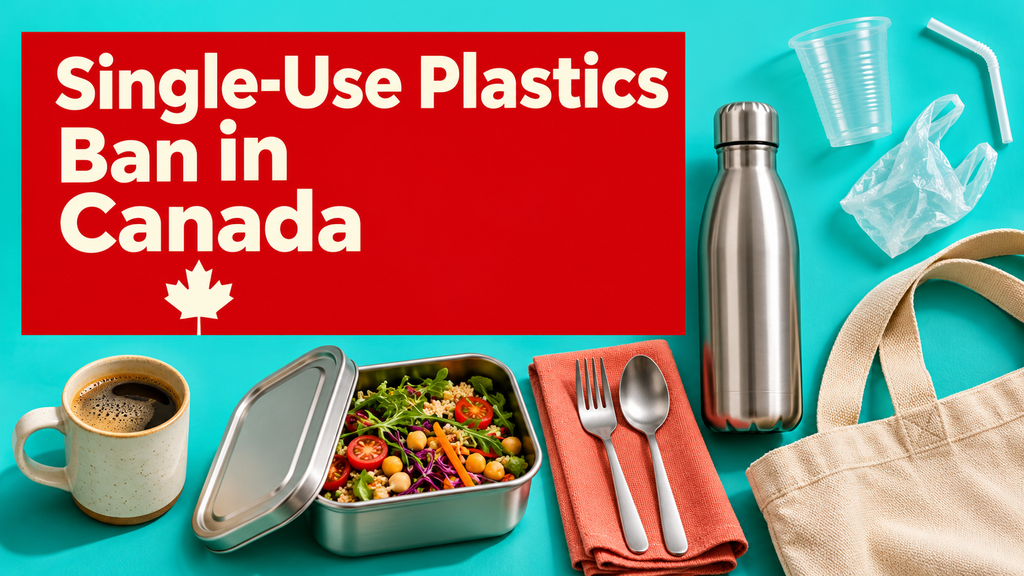
Canada has taken major steps to cut plastic pollution by banning several common single-use plastic items. Plastic checkout bags, straws, cutlery, stir sticks, ring carriers and certain takeout containers have largely disappeared from stores and restaurants across the country.
The federal ban faced a serious legal challenge, but a 2026 appeal court ruling allowed it to stay in place. This guide explains what is banned, the timeline of the rules, exemptions, the court battle over plastics being listed as “toxic”, how provincial rules add to the federal ban, what businesses must do to comply, and what consumers can expect next.
Table of Contents
The Single-Use Plastics Ban at a Glance
| Feature | Details |
|---|---|
| Federal regulation | Single-use Plastics Prohibition Regulations |
| Legal basis | Canadian Environmental Protection Act, 1999 (CEPA) |
| Items covered | Checkout bags, cutlery, straws, stir sticks, ring carriers, certain takeout containers |
| Regulations in force | December 20, 2022 |
| Key court ruling | Federal Court of Appeal, January 30, 2026 |
| Current status | Regulations remain in force |
What Items Are Banned?
The federal rules cover six categories of plastic products. A summary of the 2026 ruling notes it keeps in place the ban on six categories of single‑use plastics from the Single-use Plastics Prohibition Regulations – checkout bags, cutlery, straws, stir sticks, ring carriers, and certain take‑out containers.
1. Plastic Checkout Bags
Single-use plastic bags given to customers at checkout are banned. Many stores now offer paper or reusable bags instead, often for a fee set by provinces or the retailer.
2. Plastic Cutlery
Single-use plastic forks, knives, spoons and chopsticks are banned. Restaurants now use wood, bamboo, paper-based or reusable alternatives.
3. Plastic Straws
Single-use plastic straws are banned, with limited exceptions for people who need flexible straws for medical or accessibility reasons.
4. Stir Sticks
Plastic coffee and drink stir sticks are banned. Wooden sticks or reusable spoons are common replacements.
5. Ring Carriers
Plastic rings used to hold cans and bottles together in multipacks are banned. Producers now use cardboard carriers or alternative packaging.
6. Certain Takeout Containers
Foodservice ware made from hard-to-recycle plastics, such as expanded polystyrene foam, PVC and some other problem plastics, is banned. This includes many foam clamshells, cups and plates.
Timeline of the Ban
The federal ban was introduced in phases to give businesses time to adjust.
| Date | Milestone |
|---|---|
| 2021 | Plastic manufactured items listed as toxic under CEPA |
| December 20, 2022 | Single-use Plastics Prohibition Regulations came into effect, starting the manufacturing and import ban for most items |
| December 20, 2023 | Sale of most banned items prohibited across Canada |
| 2023 to 2024 | Phased ban on ring carriers |
| November 2023 | Federal Court struck down the toxic listing, decision stayed pending appeal |
| January 30, 2026 | Federal Court of Appeal upheld the toxic listing |
The regulations, which came into effect on December 20, 2022, were rolled out in stages. A planned final phase was a ban on the manufacture, import and sale of the regulated products for the purpose of export (i.e., sale or supply outside of Canada) and was intended to come into force on December 20, 2025. Businesses involved in exports should confirm the current status of this phase.
The Court Battle Over “Toxic” Plastics
Why Plastics Were Listed as Toxic
The federal government could only ban these products after designating them under CEPA. In 2021, the federal government listed “plastic manufactured items” (“PMI”) as toxic substances under Schedule 1 of the Canadian Environmental Protection Act, 1999. The listing was a precursor to enable the federal environment minister to proceed with regulations to ban single-use plastic items nationally.
The 2023 Federal Court Decision
Industry groups challenged the listing. The initial decision to list plastics as toxic was challenged by a group representing companies from Canada’s plastics industry, along with three chemical companies which manufacture plastics.
In November 2023, the Federal Court sided with the challengers. The ruling found the toxic designation was too broad to designate all such items with the label, in part because plastics were not a singular substance. However, the government appealed and obtained a stay of the lower court’s decision, resulting in the Order remaining in effect pending the appeal.
The 2026 Appeal Court Victory
On January 30, 2026, the Federal Court of Appeal upheld the federal government’s decision to list “plastic manufactured items” as toxic under the Canadian Environmental Protection Act (CEPA). As a result of the unanimous decision, Canada’s Single-use Plastics Prohibition Regulations remain in effect, maintaining the ban on the manufacture and sale of single-use plastic items.
The appeal court explained its reasoning. It argued the lower court had erred by viewing as one step what was actually a two-step process — the first being designating plastics as toxic under the Act, and the second being regulation of individual plastic items. It also held that “plastic manufactured items” fall within CEPA’s definition of “substance”, rejecting the argument that the plural wording rendered the listing invalid.
What Happens Next
The legal fight may not be over. As of April 2026, the Responsible Plastic Use Coalition has sought leave to appeal to the Supreme Court of Canada, and a decision on leave is pending. The regulations themselves also face a separate Federal Court proceeding that is currently stayed pending a final judgment on the Order.
For now, businesses must keep following the rules. Legal analysts advise that businesses who manufacture, distribute, sell, supply or use the categories of single-use plastic products covered by the SUP Regulations must continue to comply with the regulations and should remain alert to any new regulations in this space.
Will the Ban Expand?
The ruling could open the door to further restrictions. Lawyers note it may pave the way for expansion to additional single‑use plastics. However, federal Environment Minister Julie Dabrusin wouldn’t indicate whether the government intends to broaden its ban on single-use plastics.
Provincial Rules Add to the Federal Ban
Several provinces have their own single-use plastic rules that go further than federal law.
British Columbia Example
British Columbia is one of the most active provinces. Under its own regulation, businesses must charge at least $2 for each new reusable shopping bag and at least 25¢ for each new recycled paper shopping bag. BC also restricts more takeout items, and as of July 15, 2024, single-use plastic takeout containers and glasses that are hard to recycle, including those made with “biodegradable” and “compostable” plastics as well, will no longer be distributed in B.C.
BC has announced future phase-outs too. On July 1, 2028, the province will ban the use of polyvinyl chloride (PVC) film wrap, also known as cling film.
Other Provinces and Cities
Other provinces and municipalities have introduced bag bans, bag fees or restrictions on foam containers. Businesses operating in multiple provinces must follow both federal rules and the stricter local rules where they apply.
What Businesses Must Do to Comply
Retailers
- Stop offering plastic checkout bags.
- Use compliant paper or reusable bags and follow provincial fee rules.
- Remove banned items such as plastic cutlery and straws from shelves.
- Check that multipack products do not use plastic ring carriers.
Restaurants and Food Service
- Replace plastic cutlery, straws and stir sticks with alternatives.
- Switch from foam and other banned containers to compliant packaging.
- Offer straws and utensils only on request where provincial rules require it.
- Keep a small supply of flexible straws for accessibility needs where allowed.
Manufacturers, Importers and Distributors
- Stop manufacturing or importing banned products for the Canadian market.
- Review product catalogues and supplier contracts.
- Track any changes affecting export rules.
- Keep documentation to show compliance.
Managing Costs
Alternatives often cost more than the plastics they replace. Businesses can control costs by:
- Buying in bulk or joining purchasing groups
- Charging bag fees where allowed or required
- Offering discounts for customers who bring reusable cups and containers
- Reviewing packaging design to use less material overall
Impact on Consumers
What You Will Notice
- No plastic bags at checkout, with fees for paper or reusable bags in some provinces
- Wooden, paper or compostable cutlery with takeout orders
- Paper straws or no straws unless requested
- Cardboard multipack carriers instead of plastic rings
- Fewer foam takeout containers
Saving Money and Reducing Waste
- Carry reusable bags, cutlery and a water bottle.
- Use a reusable coffee cup, which some cafés reward with discounts.
- Bring containers for leftovers when dining out.
- Choose products with less packaging.
Environmental Goals
The ban aims to reduce litter, protect wildlife and keep plastics out of oceans and waterways. Supporters say the court decision confirms the government’s approach. Former environment minister Steven Guilbeault said, “The federal government was entirely justified in listing plastics as toxic, and on the basis of that starting to implement measures to reduce plastic pollution in Canada.”
Critics in the plastics industry argue that most plastic waste is managed in landfills and recycling systems. The 2023 lower court judgment emphasized that most plastic waste in Canada remains within managed waste streams such as landfills and recycling systems.
Final Thoughts
Canada’s single-use plastics ban covers six key product categories: checkout bags, cutlery, straws, stir sticks, ring carriers and certain takeout containers. After a 2023 setback in Federal Court, the federal government won a unanimous appeal in January 2026, keeping the ban in force while a possible Supreme Court appeal is considered.
Businesses must continue complying with both federal and provincial rules, while consumers can save money and reduce waste by switching to reusable alternatives. With legal uncertainty narrowing, further restrictions on single-use plastics remain possible in the years ahead.
Frequently Asked Questions
1. What single-use plastics are banned in Canada?
The federal ban covers plastic checkout bags, cutlery, straws, stir sticks, ring carriers and certain takeout containers made from hard-to-recycle plastics.
2. Is Canada’s plastic ban still in effect?
Yes. The Federal Court of Appeal upheld the toxic listing on January 30, 2026, so the Single-use Plastics Prohibition Regulations remain in force.
3. Do provinces have their own plastic rules?
Yes. Some provinces, such as British Columbia, have additional rules, including minimum fees for paper and reusable bags and bans on more takeout items.