Home composting is one of the easiest ways to cut household garbage, improve your garden soil and save money on fertiliser. In British Columbia, it also connects to regional rules that keep food scraps out of landfills and to wildlife safety concerns that are unique to bear country.
Whether you have a large backyard, a small townhouse patio or an apartment balcony, there is a composting method that can work for you. This guide explains BC’s food scrap rules, the main home composting methods, what you can and cannot compost, how to compost safely around bears and rodents, step-by-step setup, troubleshooting common problems, costs, and how to use finished compost.
Table of Contents
Why Composting Matters in BC
Food scraps and yard waste make up a large share of household garbage. In Burnaby, for example, the city notes that food scraps make up to 40% of our household waste and are banned from the garbage.
Composting turns that waste into a useful product. Metro Vancouver explains that composting is nature’s way of recycling, turning organic waste (like food scraps) into natural humus, which looks a lot like soil. Using a backyard composter allows the natural recycling process to happen, returning nutrients to the soil and helping keep the planet cool.
BC Food Scrap Rules to Know
Several regions in BC ban food scraps from the garbage.
Metro Vancouver
In Metro Vancouver, food scraps have been banned from disposal since January 2015. This applies to apartments and condos as well as detached homes. A penalty is charged on loads of waste that contain excessive amounts of visible food scraps.
The programme has been successful. The region’s residents saved more than 400,000 tonnes of food scraps from the garbage in 2023.
Capital Regional District (Victoria Area)
The Victoria region has similar rules. A landfill ban on food scraps and soiled paper products was put in place in January 2015. This includes scraps from fruits, vegetables, dairy, meat, grains, bones, and soiled paper products such as paper plates and napkins.
Green Bins vs Home Composting
Most residents in these regions can use a municipal green bin, a backyard composter or both. Home composting reduces what goes into your green bin, while the green bin can handle items that are not suitable for backyard bins, such as meat and bones.
Home Composting Methods
| Method | Best For | Space Needed | Handles Meat and Dairy? |
|---|---|---|---|
| Backyard compost bin | Houses with yards | Small yard area | No |
| Compost tumbler | Faster results, tidy yards | Patio or yard | No |
| Worm bin (vermicomposting) | Apartments and small homes | Indoor corner or balcony | No |
| Bokashi bucket | Apartments, all food types | Under the sink | Yes, as a pre-treatment |
| Food digester | Some yards, cooked foods | In-ground space | Some types |
| Leaf and yard waste pile | Garden waste only | Larger yard | No |
Backyard Compost Bin
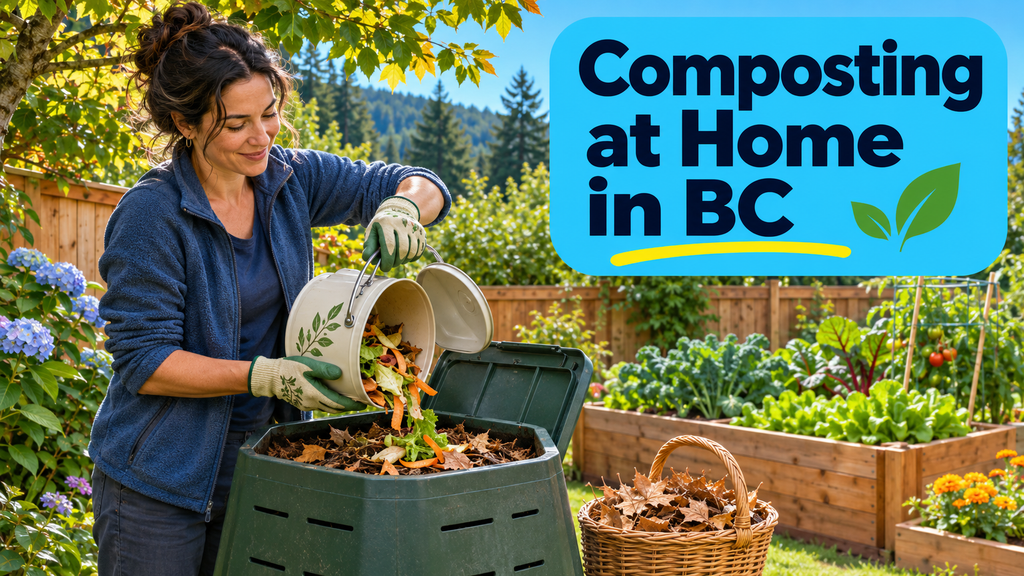
This is the most common method. A closed plastic or wooden bin sits on bare soil, allowing worms and microorganisms to enter from below. It suits fruit and vegetable scraps, coffee grounds, leaves and grass clippings.
Compost Tumbler
Tumblers are raised bins that rotate, making it easy to mix and aerate compost. They can produce compost faster and are harder for pests to access.
Worm Composting
Worm bins are ideal if you lack a yard. The Victoria region notes that home options include using backyard bins and digesters or vermicomposting (worm composting) if you don’t have a yard. Red wiggler worms break down scraps into nutrient-rich castings.
Bokashi
Bokashi uses a special bran to ferment food scraps in an airtight bucket. The fermented material can then be buried in soil or added to a compost bin, making it a good option for apartments.
What to Compost: Greens and Browns
Good compost needs a balance of nitrogen-rich “greens” and carbon-rich “browns”.
Greens (Nitrogen)
- Fruit and vegetable scraps
- Coffee grounds and paper filters
- Tea leaves and paper tea bags
- Fresh grass clippings
- Plant trimmings
Browns (Carbon)
- Dry leaves
- Shredded paper and cardboard
- Straw and wood chips
- Paper towel rolls and egg cartons
Paper products are especially useful. Items such as egg cartons, paper bags, tissue paper, and paper towel rolls are a great source of brown materials for your compost bin.
Ideal Ratio
Aim for roughly two to three parts browns to one part greens by volume. Too many greens cause smells, while too many browns slow the process.
What Not to Put in a Backyard Composter
- Meat, fish and bones
- Dairy products
- Oils, fats and grease
- Cooked foods and leftovers
- Pet waste
- Diseased plants and weeds with seeds
- Treated wood or coal ash
- Plastic bags, even those labelled compostable
Regional districts give clear advice. The Regional District of Kootenay Boundary recommends putting meat, bones, fish, dairy, oils, fat and fruit in your green bin – never in your backyard compost bin.
Be careful with “compostable” plastics. Burnaby warns that plastic bags labelled “compostable” or “biodegradable” tend not to break down properly during composting, and may contaminate the finished compost as a result.
Composting in Bear Country
Much of BC is home to black bears, and compost can attract them. Garbage and compost is the attractant in over 60% of problem bear reports to the BC Conservation Officer Service. Black bears have a keen sense of smell, and can detect food from over one kilometre away.
Bear-Smart Composting Tips
- Limit food scraps: In areas where bears are a concern, WildSafeBC advice is to include only garden waste in the compost and keep an indoor compost (using a worm bin) if possible for food scraps.
- Avoid smelly foods: The Regional District of Nanaimo advises: don’t put meat, fish, cooked foods, bread, fruit, cereal etc. in your backyard composter.
- Use lime: Sprinkle your compost with garden lime. Lime aids the composting process and reduces odours that might attract bears or wildlife.
- Maintain your pile: The Central Okanagan recommends you use lime, turn compost often and cut food waste into small bits.
- Watch the season: Vancouver Island bears are most active between early spring and late fall.
Legal Responsibility
Ignoring attractants can lead to enforcement. Conservation Officers now have the authority to issue “Dangerous Wildlife Protection Orders” to owners or occupiers of land to have them contain, move or remove food, food waste, compost or garbage that may attract bears.
Report bear conflicts through the RAPP line at 1.877.952.7277.
Keeping Rats and Other Pests Away
Rats, raccoons and other animals can also be drawn to compost.
- Use a closed bin with a tight-fitting lid.
- Place hardware cloth or wire mesh under the bin.
- Bury food scraps in the centre of the pile and cover them with browns.
- Keep the pile moist but not wet.
- Turn compost regularly to speed up breakdown.
Serious pest infestations can damage homes and gardens. Check whether your home insurance policy covers rodent damage, as many policies exclude it, making prevention even more important.
How to Start Composting: Step by Step
Step 1: Choose Your Method
Pick a method that fits your space, time and wildlife risks.
Step 2: Pick a Location
Place outdoor bins on level, well-drained ground, partly shaded and away from doors, windows and property lines.
Step 3: Start With a Base Layer
Add a layer of coarse browns such as twigs or straw to help airflow.
Step 4: Add Layers
Alternate greens and browns. Always cover fresh food scraps with browns.
Step 5: Keep It Moist
The pile should feel like a wrung-out sponge. Add water in dry weather or more browns if it becomes soggy.
Step 6: Turn Regularly
Mix or turn the pile every one to two weeks to add oxygen.
Step 7: Harvest Compost
Finished compost is dark, crumbly and smells earthy. This usually takes a few months to a year depending on the method and season.
Keeping Food Scraps Tidy Indoors
A small kitchen container makes composting easier. Burnaby describes kitchen catchers as countertop containers which can be placed in your kitchen or under your sink to help you separate food scraps.
To reduce smells, larger or moist food scraps can be frozen in your freezer before placing them into the green bin on collection day, and the same trick works before adding scraps to an outdoor composter. Food scraps wrapped in newspaper or paper bags are accepted in the green bin.
Troubleshooting Common Problems
| Problem | Likely Cause | Solution |
|---|---|---|
| Bad smell | Too many greens or too wet | Add browns and turn the pile |
| Slow breakdown | Too dry or too many browns | Add water and greens, turn more often |
| Flies | Exposed food scraps | Bury scraps and cover with browns |
| Pests | Meat, dairy or open bin | Remove attractants, secure the bin |
| Soggy pile | Heavy rain or poor drainage | Add dry leaves and cover the bin |
Costs and Savings
Home composting is affordable. Basic bins and tumblers vary in price, and many BC municipalities have offered discounted backyard composters or worm bins to residents.
You can save money by:
- Reducing the need for bagged soil and fertiliser
- Lowering green bin or garbage volumes in areas with pay-as-you-throw systems
- Improving soil health so plants need less watering and fewer treatments
Healthy, well-kept gardens can also add curb appeal and support property value.
Using Finished Compost
- Mix compost into vegetable and flower beds before planting.
- Spread a thin layer on lawns as a top dressing.
- Add compost to potting mixes for containers.
- Use compost around trees and shrubs as mulch.
- Make compost tea for watering plants.
Getting Help and Learning More
Local organisations offer support. The Victoria area points residents to the Compost Education Centre, which provides workshops and factsheets to help people compost at home. In the Lower Mainland, Recycling Council of BC staff can answer questions on food scraps recycling through the Recycling Hotline at 604-RECYCLE (604-732-9253).
Final Thoughts
Composting at home in BC is a simple, money-saving way to reduce waste and build healthy garden soil. With food scraps banned from garbage in Metro Vancouver and the Capital Region, home composting works alongside municipal green bins to keep organics out of landfills.
Choose a method that fits your space, balance greens and browns, keep meat and dairy in the green bin, and follow bear-smart practices in wildlife areas. With a little care, you can turn kitchen and yard waste into rich compost for your garden.
Frequently Asked Questions
1. Are food scraps banned from garbage in BC?
In Metro Vancouver and the Capital Regional District, food scraps have been banned from garbage since January 2015. Other regions have their own rules, so check with your local government.
2. Can I compost meat in my backyard bin?
No. Meat, fish, bones, dairy and oils attract pests and wildlife. Put them in your municipal green bin instead.
3. How do I compost safely in bear country?
Limit outdoor compost to garden waste, use an indoor worm bin for food scraps, add lime, turn the pile often and never add meat, fish, fruit or cooked foods.