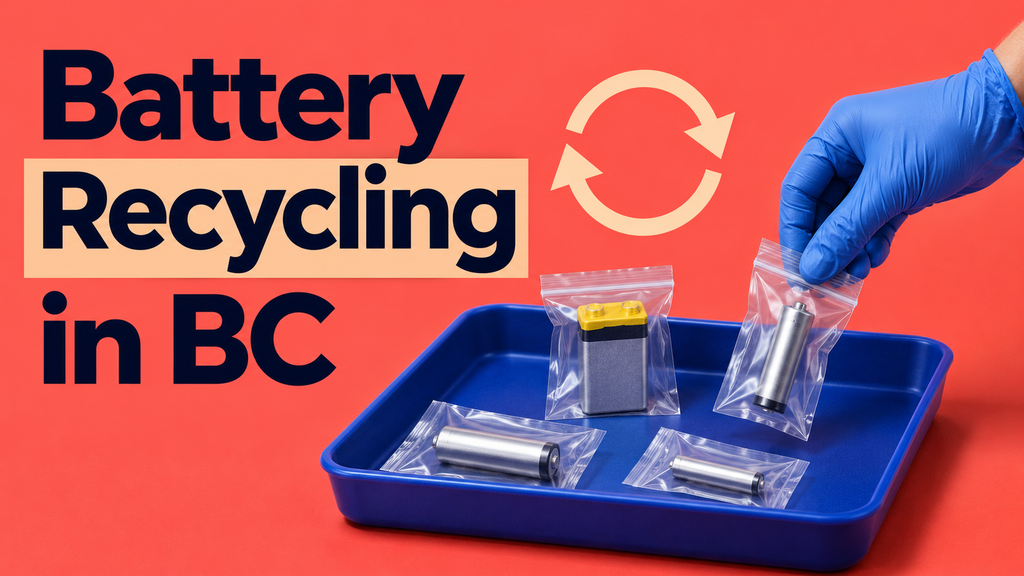
Batteries power almost everything we use, from TV remotes and smoke alarms to phones, power tools and e-bikes. When they run out, many end up forgotten in drawers or tossed in the garbage, where they can leak harmful substances or even start fires.
British Columbia has a free, province-wide system for recycling household batteries, along with a separate programme for e-bikes and their batteries. This guide explains who runs battery recycling in BC, which batteries are accepted, how to store and tape them safely, where to drop them off, what the environmental handling fee covers, how e-bike recycling works, and what businesses selling batteries need to know.
Table of Contents
Who Runs Battery Recycling in BC?
Call2Recycle is the official battery stewardship program in British Columbia, and it accepts used household batteries (weighing less than 5 kg each) at no charge. There are over 1,700 locations where you can recycle your batteries in B.C.
The organisation has a long history in the province. Call2Recycle has managed a battery collection and recycling program in British Columbia (BC) under an approved EPR plan since 2010. In 2024, the collection program was rebranded as Recycle Your Batteries, Canada!.
| Feature | Details |
|---|---|
| Programme operator | Call2Recycle Canada |
| Consumer programme name | Recycle Your Batteries, Canada! |
| Batteries covered | Household batteries under 5 kg |
| Cost to recycle | Free at drop-off locations |
| Drop-off locations in BC | Over 1,700 |
| Separate programme | BC e-transport recycling for e-bikes |
Why Battery Recycling Matters
Fire Safety
Lithium-ion and other rechargeable batteries can short-circuit and ignite when damaged or when their terminals touch metal. Batteries in garbage and recycling trucks have been linked to fires at waste facilities.
Protecting the Environment
Batteries contain metals and chemicals that should not end up in landfills. Recycling keeps them out of soil and water.
Recovering Valuable Materials
Recycled batteries are a source of metals such as nickel, cobalt, lithium, zinc and steel. Call2Recycle notes that the valuable metals and components can be used to manufacture new products, reducing the need to mine virgin resources.
Which Batteries Can You Recycle?
The main BC programme covers household dry-cell batteries under 5 kilograms. Common examples include:
- AA, AAA, C, D and 9V alkaline batteries
- Button and coin cell batteries from watches, hearing aids and key fobs
- Rechargeable batteries such as lithium-ion, nickel-metal hydride and nickel-cadmium
- Batteries from phones, laptops, cameras and cordless tools
- Small sealed lead-acid batteries from devices such as emergency lights and alarm systems
Batteries Handled Differently
- Car and truck batteries: Large lead-acid vehicle batteries are managed through a separate system and are commonly accepted by auto parts retailers, scrap dealers and transfer stations.
- E-bike batteries: BC has a dedicated e-transport programme, explained below.
- Electric vehicle batteries: These require specialist handling through dealers or approved recyclers.
- Damaged or swollen batteries: These need extra care and should be bagged individually and taken to a site that accepts them.
Upcoming Changes
Call2Recycle submitted its 2025–2029 British Columbia Extended Producer Responsibility (EPR) Plan for Batteries on February 27, 2026, in accordance with Part 2, Section 6 of British Columbia’s Recycling Regulation. Public consultation in late 2026 invited written comments specific to vapes/e-cigarettes, 12 volt batteries, and portable power, signalling that more product types may be covered in future.
How to Recycle Batteries Safely: Collect, Protect, Drop Off
Call2Recycle promotes a simple three-step method that it has used in campaigns educating the public to “Collect, Protect and Drop Off” their batteries every 3 months.
Step 1: Collect
Store used batteries in a non-metal container like a glass or plastic jar. Keep the container in a cool, dry place away from heat and sunlight, and out of reach of children and pets.
Step 2: Protect
Taping prevents sparks and short circuits. Lithium Ion (Li-Ion), Small Sealed Lead Acid (SSLA) rechargeable batteries and lithium primary batteries must be individually bagged or have their terminals covered using electrical tape, duct tape or packing tape, before they are dropped into Call2Recycle boxes.
Simple taping tips:
- Cover both ends of cylindrical batteries with clear tape.
- Cover the metal contacts on phone and laptop batteries.
- Place damaged or swollen batteries in individual plastic bags.
- Never puncture, crush or try to open a battery.
Step 3: Drop Off
Do not store batteries for long periods. Drop off your batteries at least every 3 months to avoid corrosion. Use the Call2Recycle locator to find a drop-off site near you.
Where to Drop Off Batteries in BC
Drop-off locations are widely available. Call2Recycle drop-off locations remain highly accessible to BC residents with 95% of people having a public collection facility within 15 km of their home.
Typical drop-off sites include:
- Hardware and home improvement stores
- Electronics retailers
- Office supply stores
- Some grocery and pharmacy locations
- Municipal recycling depots and transfer stations
- Community collection events
Always check that a location is currently accepting batteries, particularly for larger rechargeable packs.
What Happens to Recycled Batteries?
Once collected, Call2Recycle arranges transport of the batteries to sorting partners who organize them by chemistry. In BC, batteries collected by Call2Recycle are typically consolidated and sorted within the province at Cirba Solutions (formerly Retriev) in Trail, BC or GFL in Delta, BC.
After sorting, batteries are processed to recover metals and other materials that can be used to make new batteries, steel products and other goods.
Is There a Fee for Recycling Batteries?
Recycling batteries at drop-off sites is free. The programme is funded upfront through environmental handling fees (EHFs) paid by producers, which may be passed on to shoppers when they buy new batteries or battery-powered products.
| Charge | When You Pay | Refundable? |
|---|---|---|
| Environmental handling fee | At purchase, if applied by the retailer | No |
| Drop-off fee | Not charged at programme sites | Not applicable |
The EHF is not a deposit, so you do not receive money back when you return used batteries. It simply pays for collection, transport and recycling.
E-Bike and E-Transport Recycling in BC
E-bikes have become very popular in BC, and their large lithium-ion batteries need careful handling. The province now has a dedicated programme.
How the Programme Started
On July 15, 2024, Call2Recycle Canada’s BC Extended Producer Responsibility plan for e-transport was approved, creating a stewardship programme for these products.
What It Covers
Call2Recycle’s BC e-Transport program manages the collection and recycling of entire e-transport products, including the batteries that power them, on behalf of producers obligated in British Columbia. Accepted products include e-bikes and their components (such as batteries, seats, handlebars, pedals, dropper posts, tires, rims, etc.).
How to Recycle an E-Bike
Riders can either drop off their e-transport products at designated collection facilities or request direct pick-up services through the Call2Recycle website. As the network grows, drop-off points will include independent bicycle retailers and recycling depots.
How It Is Funded
The BC e-transport program is funded by an Environmental Handling Fee applied to each e-transport product sold in the British Columbia market.
E-Bike Battery Safety Tips
- Charge batteries on a hard, non-flammable surface.
- Use the charger supplied by the manufacturer.
- Do not charge overnight or while away from home.
- Stop using batteries that are swollen, leaking, hot or damaged.
- Store e-bikes away from exits so a fire cannot block escape routes.
- Check that your home insurance policy covers e-bike charging and storage, and ask whether your e-bike needs separate coverage for theft or damage.
Battery Recycling for Businesses
Collection Partners
Retailers, offices, schools and municipalities can become collection partners and host battery drop-off boxes. This adds convenience for customers and staff and helps keep batteries out of workplace waste bins.
Producer Obligations
If you manufacture, distribute/sell, or import batteries in BC, you may have steward obligations. Obligated businesses usually join Call2Recycle, report the batteries they supply and pay fees that fund the programme.
Workplace Safety
Businesses that handle large numbers of batteries, such as electronics repair shops and fleet operators, should store used batteries in approved containers, tape terminals and keep collection areas away from heat. Fire safety planning and commercial property insurance are especially important where lithium-ion batteries are stored.
Common Battery Recycling Mistakes
- Throwing batteries in household garbage or blue boxes
- Storing loose batteries in metal containers or junk drawers
- Mixing untaped lithium batteries with other batteries
- Keeping used batteries for years before recycling
- Trying to remove built-in batteries from devices without proper tools
- Ignoring swollen or overheating batteries
Final Thoughts
Battery recycling in BC is free, convenient and important for safety. Call2Recycle’s Recycle Your Batteries, Canada! programme accepts household batteries under 5 kilograms at more than 1,700 locations across the province, while a separate e-transport programme handles complete e-bikes and their batteries.
Follow the Collect, Protect, Drop Off method: store batteries in a non-metal container, tape terminals on lithium and rechargeable batteries, and drop them off at least every three months. These simple steps help prevent fires, protect the environment and recover valuable materials.
Frequently Asked Questions
1. Is battery recycling free in BC?
Yes. Household batteries under 5 kilograms can be dropped off at Call2Recycle locations across BC at no charge.
2. Do I need to tape batteries before recycling?
Yes for many types. Lithium-ion, small sealed lead-acid and lithium primary batteries should be taped on the terminals or bagged individually before drop-off.
3. How do I recycle an e-bike battery in BC?
BC has a dedicated e-transport programme run by Call2Recycle. You can drop off e-bikes and batteries at designated facilities or request pickup through the Call2Recycle website.