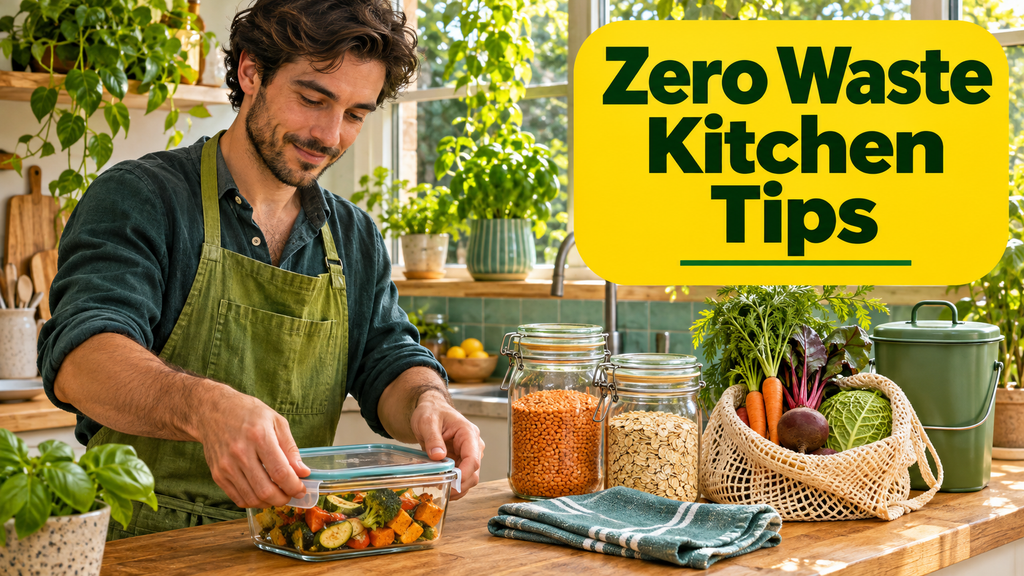
The kitchen produces more household waste than any other room. Food scraps, plastic packaging, paper towels, cling wrap and expired groceries all add up week after week, and so does the money spent replacing them.
A zero waste kitchen does not mean being perfect or throwing out everything you own to buy new “eco” products. It means making small, steady changes in how you shop, store, cook and clean so less ends up in the bin. This guide walks through practical tips for every part of the kitchen, from planning meals and storing food to cleaning without disposables, composting scraps and tracking the savings.
Table of Contents
What a Zero Waste Kitchen Really Means
The goal is to send as little as possible to landfill by following a simple order of priorities:
- Refuse what you do not need, such as excess packaging and freebies.
- Reduce what you buy and use.
- Reuse items you already have.
- Recycle what cannot be reused.
- Rot (compost) food scraps and natural materials.
Start with what you already own. Use up existing plastic containers and paper towels before switching, so you are not creating extra waste in the process.
Where Kitchen Waste Comes From
| Waste Type | Common Sources | Zero Waste Alternative |
|---|---|---|
| Food waste | Spoiled produce, leftovers, expired items | Meal planning, better storage, composting |
| Plastic packaging | Bagged produce, snack wrappers, meat trays | Loose produce, bulk shopping, butcher counter |
| Single-use paper | Paper towels, napkins, coffee filters | Cloth towels, cloth napkins, reusable filters |
| Plastic wrap and bags | Leftovers, sandwiches | Lidded containers, beeswax wraps |
| Cleaning products | Bottled sprays, sponges | Refills, homemade cleaners, compostable scrubbers |
| Small appliances and gadgets | Single-purpose tools | Multi-use tools, repair before replacing |
Smart Shopping Habits
Plan Before You Shop
Meal planning is the single most effective way to reduce food waste.
- Check what is already in your fridge, freezer and pantry.
- Plan meals around ingredients that need using up.
- Write a shopping list and stick to it.
- Plan one “use it up” meal each week, such as soup, stir-fry or frittata.
Shop With Reusables
- Keep cloth shopping bags and produce bags by the door or in the car.
- Bring jars and containers for bulk foods where stores allow.
- Take a container to the deli, butcher or bakery counter.
Choose Low-Packaging Options
- Buy loose fruit and vegetables instead of pre-packed.
- Choose larger sizes of items you use often to reduce packaging per serving.
- Pick glass, metal or paper packaging over mixed plastics when possible.
- Visit farmers markets, where produce often comes with little or no packaging.
Avoid Impulse Buys
Special deals are only worthwhile if you will actually use the food. Bulk discounts on perishables often lead to waste.
Store Food So It Lasts Longer
Good storage can add days or weeks to the life of your groceries.
Fridge Organisation
- Top shelves: Leftovers, drinks and ready-to-eat foods.
- Middle shelves: Dairy and eggs.
- Bottom shelf: Raw meat and fish in sealed containers.
- Crisper drawers: Vegetables in one, fruit in another.
- Door: Condiments, not milk, since the door is the warmest spot.
Produce Storage Tips
| Food | Best Storage |
|---|---|
| Leafy greens | Wrapped in a damp cloth in a container in the fridge |
| Herbs | Stems in a jar of water, like flowers |
| Carrots and celery | Submerged in water in a sealed container |
| Potatoes and onions | Cool, dark place, stored separately |
| Bananas | On the counter, away from other fruit |
| Berries | Unwashed in a breathable container in the fridge |
| Tomatoes | On the counter until ripe |
| Bread | Cloth bag or bread box; freeze extra slices |
First In, First Out
Move older food to the front of the fridge and pantry so it gets used first. Keep an “eat me first” box in the fridge for items close to expiry.
Understand Date Labels
“Best before” dates usually relate to quality, not safety. Many foods are still fine to eat after this date if stored properly and they look, smell and taste normal. “Use by” or expiry dates on perishable items should be followed more closely.
Make Your Freezer Work Harder
The freezer is a powerful zero waste tool.
- Freeze leftovers in portion sizes for quick meals.
- Freeze ripe bananas for smoothies and baking.
- Save vegetable scraps in a freezer bag for making stock.
- Freeze bread, tortillas and baked goods.
- Freeze herbs in olive oil in ice cube trays.
- Label everything with contents and date.
Cook to Reduce Waste
Use the Whole Ingredient
- Roast broccoli stems along with florets.
- Use carrot tops and herb stems in pesto.
- Turn stale bread into breadcrumbs or croutons.
- Make broth from bones and vegetable peels.
- Use citrus zest before juicing lemons and oranges.
Cook the Right Amount
Measure rice, pasta and grains based on how many people you are feeding. A quick guide: about half a cup of uncooked rice or 75 to 100 grams of dried pasta per adult.
Love Your Leftovers
- Turn roast vegetables into soup.
- Use leftover rice for fried rice.
- Add extra vegetables to omelettes, pasta or grain bowls.
- Pack leftovers for the next day’s lunch.
Batch Cooking
Cooking large batches of soups, stews and sauces saves time, energy and money. Portion and freeze them for busy days.
Replace Single-Use Items
| Disposable Item | Reusable Swap | Estimated Benefit |
|---|---|---|
| Paper towels | Cotton cloths and old towels cut into rags | Saves money and reduces waste |
| Paper napkins | Cloth napkins | Lasts for years |
| Plastic wrap | Beeswax wraps, lidded containers, a plate on a bowl | Cuts plastic use |
| Zip-top bags | Silicone bags, containers | Reusable hundreds of times |
| Coffee pods and filters | French press, reusable filter | Lower cost per cup |
| Disposable sponges | Washable cloths, compostable brushes | Less plastic waste |
| Bottled water | Tap water with a filter jug | Major savings |
Zero Waste Kitchen Cleaning
Simple Homemade Cleaners
- All-purpose spray: Water and white vinegar in a reusable bottle (not for natural stone).
- Scrubbing paste: Baking soda mixed with a little water.
- Glass cleaner: Diluted vinegar.
- Deodoriser: Baking soda in the fridge.
Refills and Concentrates
Buy dish soap, hand soap and cleaning concentrates in bulk or at refill shops to reduce plastic bottles.
Long-Lasting Tools
- Wooden dish brushes with replaceable heads
- Cotton dishcloths washed with laundry
- Natural fibre scrubbers
- Durable cleaning bottles reused for years
Composting and Waste Sorting
Set Up a Simple Sorting Station
Make it easy for everyone in the household to sort waste correctly:
- Compost or organics bin for food scraps
- Recycling bin for clean containers and paper
- Small bin for true garbage
- Separate bag for soft plastics if your area recycles them at depots
Composting Options
- Municipal green bin collection
- Backyard compost bin
- Worm bin for apartments
- Bokashi bucket for all food types
Composting turns peels, coffee grounds and eggshells into nutrient-rich soil instead of landfill waste.
Save Energy and Water in the Kitchen
- Use lids on pots to cook faster.
- Match pot size to burner size.
- Run the dishwasher only when full.
- Scrape plates instead of rinsing under running water.
- Use leftover cooking water (once cooled) for plants.
- Keep your fridge between 1 and 4°C and freezer at -18°C.
Lower energy and water use also means smaller utility bills.
Choose Durable Kitchen Equipment
When something needs replacing, think long-term:
- Cast iron and stainless steel pans last for decades.
- Quality knives can be sharpened instead of replaced.
- Repair small appliances when possible.
- Buy second-hand dishes, glassware and cookware.
- Avoid single-purpose gadgets that rarely get used.
Some home insurance and credit card purchase protection plans cover accidental damage or extended warranties on major appliances, so check your coverage before buying.
How Much Can a Zero Waste Kitchen Save?
| Change | Where Savings Come From |
|---|---|
| Meal planning | Fewer wasted groceries and takeout meals |
| Reusable towels and napkins | No ongoing paper purchases |
| Tap water instead of bottled | Major savings for families |
| Bulk and refill shopping | Lower cost per unit on many staples |
| Batch cooking | Less eating out and lower energy use |
| Better storage | Food lasts longer, fewer replacements |
Families who cut food waste and disposable purchases can save hundreds of dollars a year. Putting those savings into an emergency fund or using them to pay down debt can turn small kitchen habits into real financial progress.
Get the Whole Household Involved
- Explain why you are making changes.
- Label bins clearly with pictures for children.
- Assign simple jobs, such as emptying the compost or packing reusable lunch containers.
- Celebrate progress, like a week with an empty garbage bin.
- Start with one change at a time so it feels manageable.
A Simple 30-Day Zero Waste Kitchen Plan
| Week | Focus |
|---|---|
| Week 1 | Audit your trash and start meal planning |
| Week 2 | Switch to reusable bags, cloths and containers |
| Week 3 | Improve food storage and start composting |
| Week 4 | Try bulk shopping and homemade cleaners |
Final Thoughts
A zero waste kitchen is built through small, practical habits rather than perfection. Planning meals, storing food properly, cooking creatively with leftovers, replacing disposables with reusables, composting scraps and cleaning with refills or simple homemade products can dramatically reduce your kitchen waste.
Start with the changes that feel easiest, involve your household and track your progress. Over time, you will throw away less, spend less and enjoy a cleaner, more organised kitchen.
Frequently Asked Questions
1. What is the easiest way to start a zero waste kitchen?
Start with meal planning and reusable shopping bags. These two changes quickly reduce food waste and packaging without much cost.
2. How can I reduce food waste at home?
Plan meals, shop with a list, store food properly, use leftovers creatively, freeze extras and compost scraps you cannot eat.
3. Is a zero waste kitchen more expensive?
Not usually. Some reusable items cost more upfront, but cutting food waste, bottled water and disposable products often saves money over time.