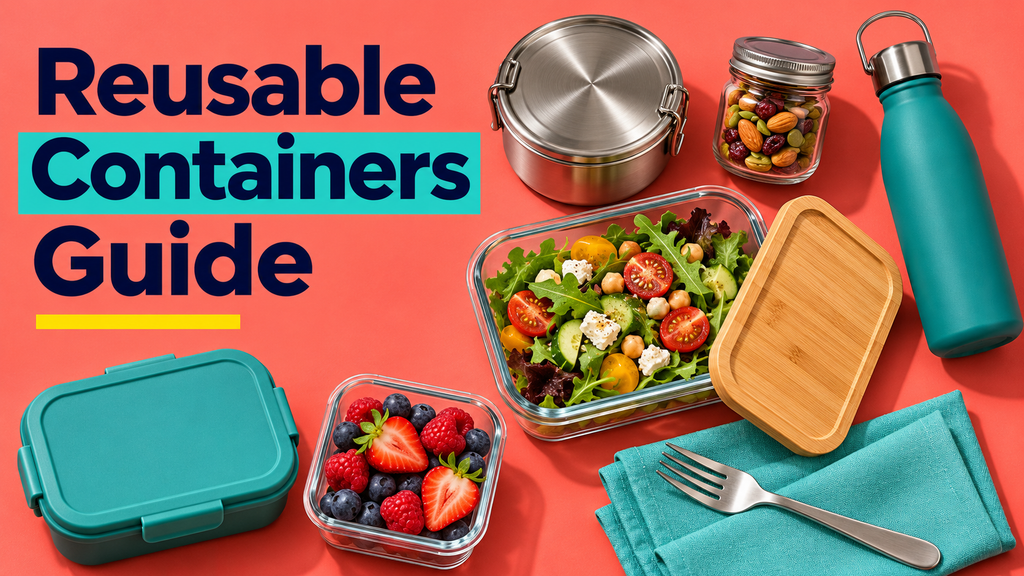
Reusable containers are one of the simplest ways to cut household waste, save money and keep food fresher for longer. From packing lunches and storing leftovers to buying bulk groceries and ordering takeout, the right containers can replace thousands of single-use bags, wraps and disposable tubs over their lifetime.
With so many materials and styles on the market, choosing the right containers can feel confusing. This guide compares the main container materials, explains food safety basics, covers microwave, dishwasher and freezer use, offers tips for organising and caring for containers, shows how much money you can save and explains how reusable containers fit into zero-waste shopping and takeout programmes.
Table of Contents
Why Switch to Reusable Containers?
Less Waste
Single-use plastic wrap, zip bags, foil and takeout tubs are often used once and thrown away. A good set of reusable containers can last for years.
Fresher Food
Airtight containers help keep leftovers, produce and pantry staples fresh, reducing food waste.
Lower Costs
Buying fewer disposable bags and wraps, and wasting less food, adds up to real savings over a year.
Better Organisation
Matching, stackable containers make fridges, freezers and pantries easier to organise.
Healthier Eating
Packing lunches and preparing meals in advance makes it easier to eat home-cooked food instead of buying fast food.
Comparing Reusable Container Materials
| Material | Pros | Cons | Best For |
|---|---|---|---|
| Glass | Non-porous, stain-resistant, oven and microwave safe (check labels) | Heavy, can break | Leftovers, meal prep, reheating |
| Stainless steel | Durable, lightweight, does not stain | Not microwave safe, cannot see contents | Lunches, snacks, travel |
| Silicone | Flexible, collapsible, freezer and often oven safe | Can absorb odours, harder to clean grease | Bags, snacks, freezer storage |
| Plastic (BPA-free) | Lightweight, affordable, unbreakable | Can stain and scratch, shorter lifespan | Kids’ lunches, dry goods |
| Beeswax wraps | Replace plastic wrap, compostable | Not for raw meat, avoid heat | Covering bowls, wrapping sandwiches and cheese |
| Bamboo or wood | Natural look | Not airtight, hand wash only | Dry snacks, serving |
Glass Containers
Glass is a favourite for home storage and meal prep. It does not absorb smells or stains and is easy to clean. Tempered glass containers are often safe in the oven, microwave and freezer, though lids usually need to be removed before heating.
Tips for glass:
- Avoid sudden temperature changes, such as moving from freezer to hot oven.
- Leave space at the top when freezing liquids.
- Store with lids separately to save cupboard space.
Stainless Steel Containers
Stainless steel is tough, light and ideal for lunches and outdoor use. Bento-style boxes with compartments are popular for kids and adults.
Tips for stainless steel:
- Never put stainless steel in the microwave.
- Choose leak-proof lids for soups and sauces.
- Use for picnics, hiking and camping.
Silicone Containers and Bags
Silicone bags are a popular replacement for disposable zip bags. Collapsible silicone containers save space when empty.
Tips for silicone:
- Turn bags inside out to clean thoroughly.
- Avoid using sharp knives inside silicone containers.
- Bake at low heat to remove stubborn odours if the manufacturer allows.
Plastic Containers
Durable plastic containers are affordable and lightweight. Choose products labelled food-safe and free of harmful chemicals such as BPA.
Tips for plastic:
- Avoid microwaving plastic unless clearly labelled microwave safe.
- Replace containers that are cracked, heavily scratched or warped.
- Use plastic mainly for cold or dry foods.
Beeswax Wraps
Beeswax wraps are cotton fabric coated with wax, resin and oil. They mould around bowls and food with the warmth of your hands.
Tips for beeswax wraps:
- Wash in cool water with mild soap.
- Avoid hot water, microwaves and dishwashers.
- Refresh worn wraps with a re-waxing kit.
Food Safety With Reusable Containers
Reusable containers are safe when used and cleaned properly.
Cleaning Basics
- Wash containers in hot, soapy water after each use.
- Use the dishwasher if containers are labelled dishwasher safe.
- Dry containers completely before storing to prevent mould.
- Pay attention to lid seals and gaskets, which can trap food.
Storing Leftovers
- Cool hot food quickly before refrigerating.
- Refrigerate leftovers within two hours of cooking.
- Use shallow containers to cool food faster.
- Label containers with the contents and date.
- Eat most leftovers within three to four days, or freeze them.
Raw Meat and Seafood
Store raw meat and seafood in sealed containers on the lowest fridge shelf to prevent drips. Wash containers thoroughly after use.
Allergies
If someone in your household has food allergies, use separate, clearly marked containers for allergen-free foods.
Microwave, Dishwasher and Freezer Guide
| Material | Microwave | Dishwasher | Freezer | Oven |
|---|---|---|---|---|
| Tempered glass | Usually yes (no lid) | Usually yes | Yes | Often yes (check label) |
| Stainless steel | No | Usually yes | Yes | Some, without lids |
| Silicone | Often yes | Often yes | Yes | Often yes (check label) |
| Plastic | Only if labelled | Top rack if labelled | Yes | No |
| Beeswax wraps | No | No | Short-term | No |
Always check the manufacturer’s instructions, as products vary.
Choosing the Right Sizes and Shapes
Common Sizes
- Small (250 to 500 mL): Snacks, dips, sauces and baby food.
- Medium (750 mL to 1 L): Lunches and single meal portions.
- Large (1.5 to 3 L): Family leftovers, salads and batch cooking.
- Extra-large: Bulk dry goods and marinating.
Shapes
- Rectangular: Stack neatly and maximise fridge space.
- Round: Good for soups, stews and mixing.
- Square: Fit well in drawers and freezers.
- Jars: Ideal for pantry staples, overnight oats and drinks.
Starter Set Suggestions
A practical starter collection might include:
- 4 to 6 medium glass containers for meal prep
- 2 to 3 large containers for family leftovers
- 1 stainless steel lunch box per person
- 3 to 4 silicone bags
- A set of beeswax wraps
- Several glass jars for pantry items
How Much Can You Save?
Reusable containers require an upfront cost but can save money over time.
| Single-Use Item | Estimated Annual Household Spending | Reusable Alternative |
|---|---|---|
| Zip-top plastic bags | $30 to $80 | Silicone bags |
| Plastic wrap and foil | $20 to $50 | Beeswax wraps, lidded containers |
| Disposable takeout containers and lunches bought out | Varies widely | Packed lunches in reusable containers |
| Wasted food from poor storage | Can be hundreds of dollars | Airtight containers |
Spending figures are rough estimates and vary by household. The biggest savings often come from reducing food waste and packing lunches instead of buying meals.
Budget Tips
- Start with a few versatile containers and build your collection gradually.
- Reuse glass jars from sauces, jams and pickles.
- Buy sets during sales events.
- Choose durable products with good warranties.
- Use cash-back rewards on household purchases, paying the balance in full each month.
Using Reusable Containers for Zero-Waste Shopping
Many refill and bulk stores let customers bring their own containers.
How It Works
- Bring clean, dry containers to the store.
- Have containers weighed (tared) before filling.
- Fill with grains, nuts, spices, oils, soaps or cleaning products.
- Label containers with product codes and pay by net weight.
Best Containers for Bulk Shopping
- Glass jars for dry goods and liquids
- Cloth bags for produce and bread
- Pump bottles for soaps and shampoos
- Lightweight containers for long walks or transit
Reusable Containers for Takeout and Dining Out
More restaurants and cafés now welcome customers who bring their own containers or offer reusable container programmes.
- Bring a container for leftovers when dining out.
- Ask cafés whether they accept personal cups and offer discounts.
- Look for local programmes where you borrow a reusable takeout container and return it later.
- Keep a clean container and cutlery in your bag or car.
Policies vary due to food safety rules, so ask staff before handing over your container.
Organising and Storing Containers
A messy container cupboard can make reusables frustrating. Keep things tidy with these tips:
- Store containers nested by size.
- Keep lids upright in a file organiser or bin.
- Match lids to containers regularly and recycle unmatched pieces where possible.
- Choose one or two brands with interchangeable lids.
- Keep a dedicated drawer or shelf for lunch containers.
When to Replace Containers
Even reusable containers wear out. Replace containers when:
- Glass is chipped or cracked
- Plastic is warped, deeply scratched or cloudy
- Lids no longer seal properly
- Silicone develops persistent odours or sticky surfaces
- Beeswax wraps no longer cling after re-waxing
Check local recycling rules before disposing of old containers, as some materials are not accepted in curbside programmes.
Reusable Containers for Kids and Families
- Choose lightweight, unbreakable containers for young children.
- Use bento boxes to offer a variety of foods in one container.
- Label containers with names for school and daycare.
- Teach kids to bring containers home for washing.
- Pack ice packs in insulated bags for food safety.
Reusable Containers at Work
- Keep a set of containers and cutlery at your desk.
- Prepare lunches in batches for the workweek.
- Encourage workplaces to provide reusable dishes and dishwashers.
- Organise office lunch swaps or meal prep groups.
Final Thoughts
Reusable containers are an easy, practical way to reduce waste, keep food fresh and save money. Glass is ideal for reheating and meal prep, stainless steel works well for lunches and travel, silicone replaces disposable bags, and beeswax wraps take the place of plastic wrap.
Start with a few versatile containers, follow safe cleaning and storage habits, and gradually build a collection that suits your household. Over time, you will throw away less packaging, waste less food and enjoy a more organised kitchen.
Frequently Asked Questions
1. What is the best material for reusable food containers?
Glass is a top choice for home storage and reheating because it is non-porous and stain-resistant. Stainless steel is best for lightweight lunches and travel.
2. Can I microwave reusable containers?
Tempered glass and many silicone containers can be microwaved, but stainless steel cannot. Only microwave plastic containers if they are clearly labelled microwave safe.
3. How long do reusable containers last?
Good-quality glass and stainless steel containers can last many years with proper care. Plastic containers should be replaced when they become warped, scratched or stained.