Vancouver has long been one of Canada’s leading cities for low-waste living. From refill shops on Main Street to bulk bins in neighbourhood grocers, residents have more ways than ever to buy food and household products without single-use packaging.
The zero-waste grocery scene has also changed over the years, with some pioneers closing and new ways of shopping taking their place. This guide covers the best-known zero-waste and refill stores in Vancouver, everyday shops with strong bulk options, delivery services, how package-free shopping works, how to save money, and tips for building a low-waste kitchen.
Table of Contents
What Is a Zero Waste Grocery Store?
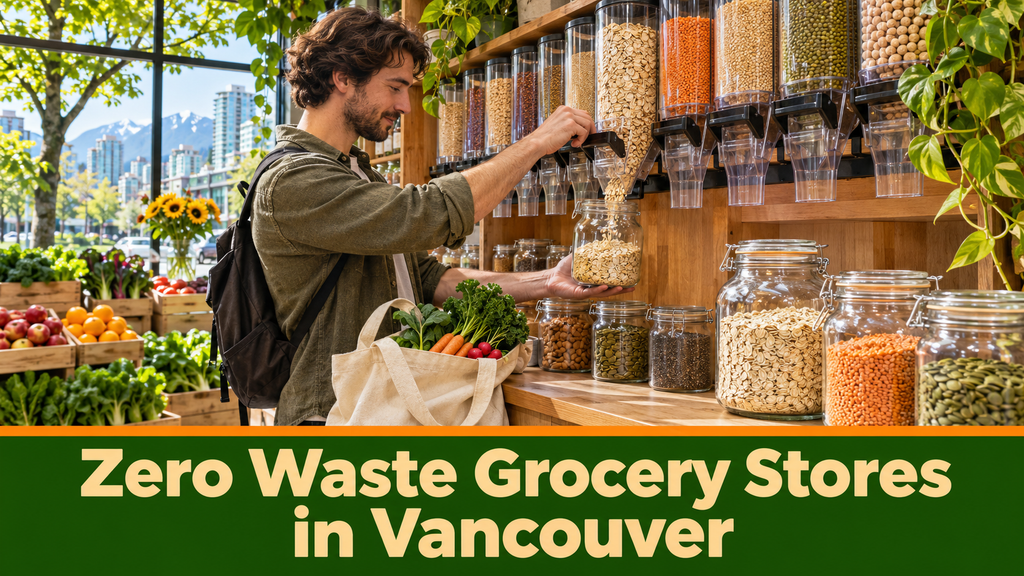
A zero-waste grocery store sells food and household goods without disposable packaging. Instead of buying items in plastic bags, boxes or bottles, customers bring their own containers or borrow reusable jars from the store.
Low-waste shopping goes beyond bulk aisles. Specialised low-waste stores offer customers a way to shop without single-use or disposable packaging from start to finish — everything from granola to yogurt.
Common Products Found in Zero Waste Stores
- Grains, rice, pasta, flour and beans
- Nuts, seeds and dried fruit
- Spices, teas and coffee
- Oils, vinegars, honey and syrups
- Laundry detergent and dish soap
- Shampoo, conditioner and body wash
- Reusable containers, produce bags and beeswax wraps
The Soap Dispensary and Kitchen Staples
The Soap Dispensary on Main Street is Vancouver’s most established refill shop. Vancouver’s first dedicated zero-waste and refill store, The Soap Dispensary, was founded in 2011 by Linh Truong as a store for refill cleaning and personal care products. It now carries more than 800 bulk and refill products, including food.
The shop is split into two sections. There are two equal halves—one for The Soap Dispensary and one for Kitchen Staples—with a walk-through at the front for the public. Customers can refill soaps, household cleaners, oils, powders and many other bulk items into containers brought from home or purchased in store.
The store places strong emphasis on carefully chosen products. “We are a very intentional business and products are selected with thought and care,” Truong has said.
What to Expect
- Bring clean, dry containers from home.
- Have containers weighed before filling so you pay only for the product.
- Expect a wide selection of cleaning and personal care refills.
- Find dry goods and pantry staples in the Kitchen Staples section.
- Purchase reusable containers if you forget your own.
Remembering Nada: A Zero Waste Pioneer
Vancouver’s zero-waste grocery history would be incomplete without Nada. Founded in 2015, Nada was one of the first zero-waste grocery purveyors in Vancouver. From pop-up beginnings, it grew to a brick-and-mortar store and delivery service.
Nada was ambitious. Its owners aimed to carry the same products a traditional grocery store would, setting it apart from the majority of zero-waste stores already in existence. The store also offered hard-to-find bulk liquids such as olive oil, honey, molasses and vinegar.
Rising costs proved challenging. Nada later announced it would close its Broadway store, saying that continuing to pay its workers a living wage would be impossible in the face of rent increases. The business eventually closed entirely.
Nada’s story shows both the demand for package-free groceries in Vancouver and the financial difficulties small zero-waste retailers face in a high-cost city.
Everyday Stores With Good Low-Waste Options
You do not need a dedicated zero-waste store to cut packaging. Many regular shops offer loose produce and bulk foods.
Low-waste advocate Emily Sproule, founder of the package-free delivery service Jarr, recommends looking beyond stores that market themselves as zero waste. You can find waste-reducing options like bulk dry ingredients and loose produce at “small places that maybe don’t classify themselves as a zero-waste store—places like Santa Barbara Market and Persia Foods.”
Other Places to Look
- Bulk food chains: Some national bulk stores allow customers to bring clean reusable containers.
- Ethnic and specialty grocers: Many sell spices, grains and legumes from bulk bins or in larger, less-packaged sizes.
- Farmers markets: Vancouver’s seasonal markets offer loose fruit and vegetables, bread and local goods with minimal packaging.
- Bakeries and butchers: Many will place items directly into your own bag or container if asked.
- Natural food stores: Often have bulk sections for nuts, grains and cleaning products.
| Store Type | Best For | Low-Waste Tip |
|---|---|---|
| Refill shops | Soaps, cleaners, oils, pantry staples | Bring jars and bottles from home |
| Specialty grocers | Spices, grains, loose produce | Use cloth produce bags |
| Farmers markets | Seasonal produce, bread, eggs | Return egg cartons and berry baskets |
| Bakeries | Bread and pastries | Bring a cloth bread bag |
| Bulk food chains | Snacks, baking supplies | Check container policies first |
Zero Waste Grocery Delivery in Vancouver
Online ordering has also become part of the low-waste scene. Several services have tried to bring package-free groceries to people’s doors.
- Jarr: In 2020, Sproule had launched Jarr, a package-free grocery delivery service also operating in and around Vancouver.
- Livlite: Grace Kennedy founded Livlite in 2020 to deliver low-waste groceries and household items to those in Vancouver and North Vancouver.
- SPUD: This online grocer has focused on cutting food waste. According to SPUD CEO Peter van Stolk, “Most grocery stores have between five to six per cent of food waste. At SPUD, we are at 0.05 per cent.”
Delivery services can change quickly, so check whether a service is currently operating and which areas it covers before ordering.
How Package-Free Shopping Works
Step 1: Prepare Your Containers
Wash and dry jars, bottles, tubs and cloth bags. Glass jars work well for dry goods, while pump bottles suit soaps and oils.
Step 2: Weigh Containers (Tare)
At most refill shops, staff weigh your empty containers first or you use a self-serve scale. The weight is subtracted at checkout.
Step 3: Fill What You Need
Buy only the amount you will use. This cuts both packaging and food waste.
Step 4: Label and Pay
Write the product name or code on your container and pay based on the net weight.
Step 5: Store Properly
Keep dry goods in airtight containers in a cool, dark place to maintain freshness.
Is Zero Waste Grocery Shopping More Expensive?
Prices vary. Some refill products are cheaper than packaged versions because you are not paying for branding and packaging. Others, especially specialty or organic items, can cost more.
Sproule notes that simpler strategies can also be more accessible ways to reduce waste for those who can’t afford the premium that often comes with shopping at dedicated zero-waste stores.
Money-Saving Tips
- Buy in bulk with friends: Sproule points out that “You can control a lot of your household waste by getting larger amounts, especially for shelf-stable items,” and some households split bulk purchases.
- Avoid over-packaged items: “If something’s double-wrapped in plastic, don’t buy it,” Sproule suggests.
- Compare unit prices: Check price per kilogram or litre between refill and packaged options.
- Use a cash-back credit card: Grocery rewards cards can offset costs, as long as you pay the balance in full each month.
- Plan meals: Buying only what you need reduces food waste and saves money.
- Shop seasonally: Local, in-season produce is often cheaper and fresher.
Benefits of Shopping Zero Waste
Less Plastic Waste
Refilling containers keeps single-use bottles, tubs and bags out of landfills and recycling systems.
Reduced Food Waste
Buying exact amounts helps households avoid throwing away expired food.
Healthier Choices
Bulk and loose foods are often less processed, encouraging home cooking with whole ingredients.
Supporting Local Businesses
Many zero-waste and refill shops are independently owned, so your spending stays in the community.
Building a Low-Waste Kitchen
- Use glass jars for pantry storage.
- Swap plastic wrap for beeswax wraps or containers with lids.
- Keep reusable shopping and produce bags in your car or bag.
- Compost food scraps through Vancouver’s green bin programme.
- Recycle packaging correctly through Recycle BC.
- Return deposit containers through Return-It for refunds.
Tips for First-Time Zero Waste Shoppers
- Start small with one or two products, such as dish soap and rice.
- Keep a shopping kit with jars and bags ready by the door.
- Check store hours and refill policies before visiting.
- Ask staff for help with taring and refill procedures.
- Do not aim for perfection; every reused container makes a difference.
Final Thoughts
Zero waste grocery shopping in Vancouver has grown from small pop-ups into an established movement. The Soap Dispensary and Kitchen Staples remains the city’s best-known refill destination, while pioneers like Nada showed both the strong demand and the challenges of running a package-free store in a high-cost city.
You can also reduce waste at specialty grocers, farmers markets and bulk stores by bringing your own containers and avoiding over-packaged products. Start with a few simple swaps, buy only what you need, and your kitchen will become lower-waste and often more affordable over time.
Frequently Asked Questions
1. What is the best-known zero waste store in Vancouver?
The Soap Dispensary and Kitchen Staples on Main Street is Vancouver’s first dedicated zero-waste and refill store, founded in 2011, with hundreds of bulk and refill products.
2. Is Nada grocery still open in Vancouver?
No. Nada, one of Vancouver’s first zero-waste grocers, closed its physical store and later shut down the business.
3. Can I bring my own containers to Vancouver grocery stores?
Many refill shops and some bulk stores accept clean containers. Policies vary, so check with each store before shopping.